Panel: Tom Martin, vice president of sales and marketing, Klocke of America; Mark Lockyer, sales director, Sampling Innovations.
GCI: Is it a reasonable or feasible goal to create a sale through samples?
Tom Martin: The major goal for companies using samples is to get their new product into the hands of consumers before or during launch to create a new buying opportunity, and/or to create a buzz and a buying opportunity for an innovative product.
Mark Lockyer: Yes, absolutely. It has been proven time and again that a good quality sample delivering a positive brand experience will directly increase sales, often with incredible results.
GCI: What other goals are expected and achievable through samples?
Martin: The brand owner can also include a point-of-sale coupon in the sample packaging to spur the consumer to try the product at a discount and also use the coupon to track the immediate effect of the sample as it relates to sales. Klocke of America’s Blister or Sachet/Packette, designed to mimic the retail product, gives the sample brand identity so the potential customers know exactly what they are looking for when they are looking to buy the product at the store level or online. This same method can also be used to reintroduce an old product back into the market.
Lockyer: Increase brand awareness, boost sales across brand/product range (including non-sampled products), encourage repeat purchase and increase footfall into retail stores.
GCI: What are new or soon-to-be-available options in creating a brand or product association through sampling—i.e. new technologies for creating samples; new designs; re-evaluations of sample designs, branding strategies, etc?
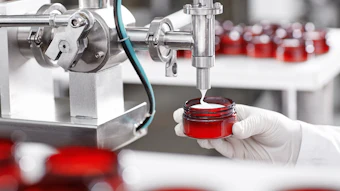
Martin: We have been able to duplicate retail bottle dosing of multiple product bulks (swirls of two or three bulks together) into the same blister or sachet chamber, which is new to the sampling industry. Our dosing capabilities have always been unique, but we really have stepped up our technical ability to dose very unique bulks to our customers’ requirements/needs and our R&D department’s expertise.
We have also expanded our printing capabilities with registered printing on a variety of clear and opaque thermoformed materials in many forms and have created and patented a stand-up blister design that garnered a lot of attention for allowing consumers to try the single-use sample and, if not fully used, snap back a ring on the form and stand up the blister to be finished later.
Lockyer: With so many sampling technologies and high-quality production methods available, it is always possible to deliver a creative sample for any brand or product. Notable new technologies from Sampling Innovations include: Imagin, a credit card-sized spray of fragrance suitable for magazine insertion; Versa Label, a fragrance label with applicator; Castelberg, customized scented technologies; and Colorkiss, which conveniently applies directly to the lips.
However, the biggest breakthrough in recent years has been the improved ability to accurately deliver samples to a specific target audience. A vast choice of distribution methods exist, many with incredibly advanced targeting capabilities, which reduces waste and significantly increases return on investment.
GCI: How have branding opportunities in sample packaging evolved over the past year?
Martin: Directly mimicking the retail package is very hot right now. It had dropped off but is now a very busy portion of our business. We also have a line of scented elastomer products that are very hot right now, which, again, are directly related to the brand by design and scent.
GCI: Brand owners like their sample packaging to be versatile. What are some of the innovations in sample packaging that allow brand owners to more effectively share their brand and product stories and most effectively deliver samples?
Martin: We have more and more customers looking to put more than one product into a sample delivery package—a gel shaving sample, for example, with an aftershave sample in a single-folded card with an internally printed coupon for either product, rather then promoting each product separately. [This includes] the use of larger cards to hold the single-dose samples.
We have also been running sachets/packettes that are two- and three-up delivered. These are multiple brand sachets with two and three products side by side. This type of delivery provides more than one branded product and also gives brands a fairly large billboard to tell their story to consumers.
Lockyer: With such a diverse range of distribution methods available to brands, a sample design that suits any form of distribution offers great benefits. For example, sachets, Sampling Innovations’ Imagin, fragrance/cosmetic labels and Sampling Innovations’ Colorkiss allow sample delivery under any circumstances.
GCI: How can sample packaging deliver the same messages that can be delivered through the primary product packaging—things such as brand position (natural line, high-tech line) and the brand owner company’s corporate values (green company, sustainable initiatives, ethical sourcing, etc)?
Martin: The basic message is the identity of the sample as it relates to the retail product, but that message can be expanded by utilizing the sample holder, such as the flat card, folded card or three-to-four panel booklet card that the samples are assembled in to provide space to tell the product story. We are also seeing sachets/packettes in much larger formats to create more branding and story space.
Lockyer: Miniature bottle/tube or jar samples offer an exact replica of the primary product packaging.
GCI: There was a new sampling trend in promotional samplers that are less traditional in their delivery systems and create a longer-lasting experience with the product and brand—giveaways that are permanent reminders of the product and brand. And, for instance, that for some consumers, traditional fragrance samples can take the place of an actual shelf-size purchase.
How does sample packaging walk the line with creating strong consumer awareness and providing a real brand experience (more than, for example, a one-time use sample) and not dissuade a purchase of a full-size product?
Martin: The key is in the packaging design and execution of the sample. Making sure the sample works well and [mimics and supports] the retail package. If the sample is hard to open, the dispensing method is poorly designed and the bulk is effected, the consumer will have a bad experience.
And [regarding fragrance samples], we have a line of scented elastomer and crystal products that are infused with the customers’ scented oils to give a long-lasting rendering of the scent. The scent in these sample products lasts three to six months once removed from the packaging.
Lockyer: Sample packaging encourages purchase of full-size product, as the sample educates the consumer to purchase with confidence. Sample size products are increasingly sold for the specific purpose of travel and convenience, encouraging new consumers and repeat purchases.
GCI: How would you suggest brand owners evaluate whether the sample design and the delivery system is appropriate for the brand and product?
Martin: Most of our customers have us make a marketing tool and samples from that tool to prove the design. The charges to do this are minimal, and the customers get to see exactly what they are getting and have the chance to make changes in order to get to the final designs.
Lockyer: With many options available, sample design and delivery system should be considered very carefully to suit a brand and product. Ask the advice of sampling experts, evaluate past and competitor activities, look at market research or even run a small scale trial.
Every sampling campaign should be evaluated in terms of brand impact, awareness and sales. A coupon offered with any sample offers is the simplest way to measure direct impact on sales. The key is for brands to stand out from their competition, and sampling really offers so many creative options in design and distribution to ensure a brand really stands out from the crowd. And with increased use of social media, enabling consumers to judge products and pass comments on to millions, no longer will brands succeed on [one dimensional and sample-less] marketing budgets alone. Products simply must deliver quality and value, and there is no better way for brands to demonstrate this than by offering a sample.