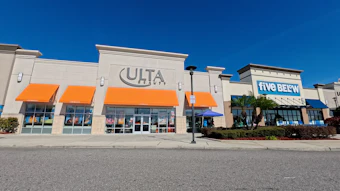
The retail environment has been shaken dramatically by a variety of developments, both local and global. In the mature retail environment of North America, the ripple effects are being felt by brands and retailers trying to balance consumers’ needs and wants with a changing global economy. As a result, alternate distribution channels are emerging, granting greater access to consumers.
Conversely, the traditional channels are altering through consolidation, even as retailers continue to blur the line between prestige and mass market.
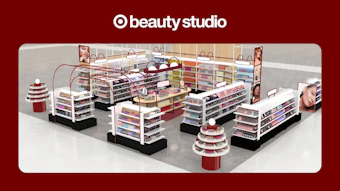
“Retailers such as Target and Wal-Mart are creating more and more prestige-like methods and working to create private label brands with names. They also may be trying to buy directly from brands as opposed to finding alternative sources to buy from,” said Beth Ann Catalano, co-founder of twist.new.brand.venture. Department stores are fi nding themselves in the position to create exclusive lines, limiting distribution to stand out from the crowd. At the same time, a unique distribution channel has emerged in Canada, where the drug store meets the prestige boutique. “Retailing has become much more sophisticated due to the high level of competition and the need to differentiate brands on the shelf,” said Laura Setzfand, director of marketing for Jason Natural Products and Zia Natural Skincare. Additionally, consumers have diversified to find the shopping experience that works for them.
Changing Environment
The current retail environment continues to erode the image of prestige products, as mass market products become more luxurious and prestige products become more accessible.
“Packaging has become a key factor in the retail market and often plays a signifi cant role in a consumer’s decision to evaluate a product, especially when product functionality is deemed to be equivalent across multiple brands,” said Setzfand. As a result, manufacturers are turning back to department stores and stand-alone boutiques to boost the prestige image of their products and differentiate them from mass-market variants. But as department stores and drugstores consolidate, a few buyers control large but fi nite amounts of retail shelf space.
“Consolidation can both enhance and hinder a brand’s distribution. A small brand may obtain additional distribution opportunities, while a larger brand may suffer from a reduction in sales due to the consolidation of store inventories,” said Setzfand.
Consolidation also has given retailers the ability to demand more of a brand, thus shifting the traditional relationship. “Retailers have more power to exercise strength in numbers. They have coast-to-coast coverage and buying power that can support or be devastating for brands,” said Catalano. For brands, this means looking to non-traditional retail opportunities for growth, such as boutiques and brand stores that serve consumers looking for a personal touch.
Is Smaller Better?
Boutiques and brand stores offer smaller, niche brands a distribution channel outside of the mainstream while providing well-known brands to their customers. “These outlets are becoming destinations for loyal consumers to more easily fi nd their favorite products, while offering brands the opportunity to introduce their brand portfolio to new consumers who may not have seen them in a more traditional multi-brand store,” said Setzfand.
These boutiques also offer increased customer service and knowledgeable staff. “Time is usually on the side of servicing a customer in these environments and the knowledge base of the consultants is usually higher. Turnover can be less in these environments and, therefore, loyal customers can receive ongoing service,” said Catalano. Into this consumer-driven atmosphere comes Space NK, a U.K.-based beauty retailer that is expanding into the U.S. with fi ve fl agship stores during 2007.
“Space NK is based on a vision of my personal dream store,” said Nicky Kinnaird, president and creative director. “I wanted to create an experience that would impress me as a customer.” The Soho store offers a rigorously edited portfolio of 50 brands and its signature lines, along with a treatment room where clients can enjoy Eve Lom facials. The company will launch its full e-commerce store at the same time.
“In the future, we will see more of these specialized stores with trained staff that provide services and product information giving the consumer a complete shopping experience,” said Setzfand. Brand stores, such as Sephora, blend the specialized with a slightly indie feel. “The secret to Sephora’s success is the experience we offer our clients, including our layout. Sephora stores feature open-sell gondolas and along-the-wall linears, with strategically placed individual and multi-branded product highlights,” said Allison Slater, vice president of retail marketing.
Even among these boutiques and brand stores, the indie boutique stands out as an area of growth. “We provide exclusivity and brands that are unique to customers looking for something other than the big brands,” said Bridget Lescher, owner of Odalisque Beauty Apothecary in suburban Chicago. “It’s the beginning of a trend. People are tired of the impersonal mall experience. We provide an intense one-on-one shopping experience.”
These stores also provide a regional fl air and nontraditional brands to consumers. “People are boxed in, so I try to make shopping a journey, heighten the escape factor,” said Lescher. These consumers are not interested in a quick sale, but an experience, and they are willing to spend the time and money to achieve it. For some consumers, however, the shopping experience is not as critical as the ease-of-use and interactive quality offered by the Internet. These consumers are a driving force behind e-commerce.
A Key to Growth
E-commerce is a growing retail trend as consumers shop with just the click of a button. Younger consumers are a target audience for e-commerce, particularly as their spending power increases. Online retailing sites are prime destinations for women 18 to 34. While this demographic is 15.7% of all Internet users, it represents 24% of shoppers at fragrance and cosmetic sites, according to comScore Media Matrix, a research fi rm.
“The Internet will continue to grow as an information resource as well as an easy means of product replenishment for consumers who know which product they want to buy,” said Setzfand. “Since most consumers want to touch a new product before purchasing it, particularly in skin care and color cosmetics, newer brands may find it hard to get noticed without pre-established awareness,” cautions Setzfand.
Brands can leverage the Internet to increase sales by combining various distribution channels, such as boutiques and shopping networks, with a Web site. Various Web sites also offer message boards and the ability to review products, creating an interactive community for their consumers. Brands and retailers must add value to their Web sites, as online consumers come to expect an interactive experience while online. (See “Web 2.0 and the Cosmetic Industry” on page 42.)
“The Internet will continue to grow and grow, taking share from retail environments. Many details about the Internet must be satisfying to consumers, but the consumer also seems more willing to shop the Internet daily,” said Catalano.
Throughout the retail environment, times are changing. Traditional distribution channels are making room for the newer avenues. Each of these channels has loyal consumers looking for a specifi c retail experience. As a result, manufacturers and marketers must be willing to look at multiple distribution channels to see maximum growth and achieve a crosssectional consumer base.