- The Amazon region is driven by mass—not premium—products from small companies serving their local communities. However, they own less than 25% of the total market share against the 17 largest beauty companies in Brazil.
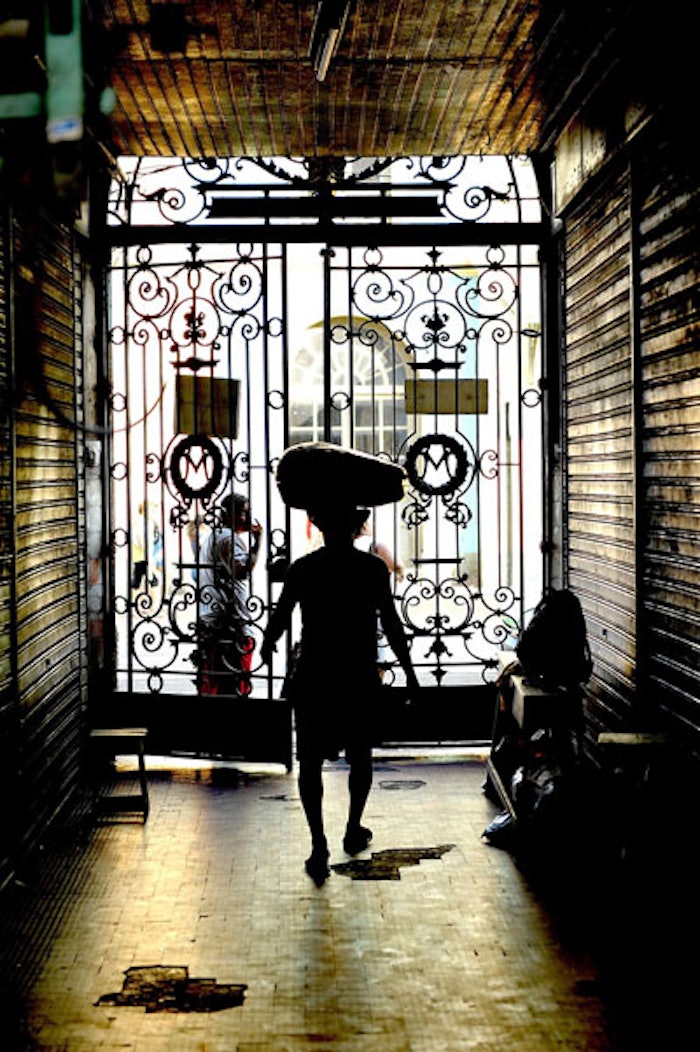
- Open air markets make little distinction between products used for beauty, medicine or food.
- Brazil is one of the largest markets in value terms for the deodorant segment, which includes body sprays. Liquid deodorant delivered via squeezable tubes accounts for 70% of mass sales.
- Argentina is the largest importer of Brazilian beauty products, which are natively sourced and feature natural components.
Three hours spent in Santa Luzia de Tomé-Açu, a community of approximately 22 families in Brazil’s northern state of Pará, and it’s painfully clear how difficult it’s going to be to deliver a neat little package labeled “the Brazilian market.” Brazil, as exemplified in this small community and painted clearly on the faces of its citizens, is a nation of immense diversity. However, there does seem to be a unifying factor. If one pays attention to the underlying currents of life in Brazil, those on which this story will rely—a discernible connection to the soil and its yields can be found. The connection is as clear as it is unspoken, and evidenced in Belém’s Ver-o-Peso (“see the weight”) open air market, while visiting farms in the Amazon forest, in the comments of young São Paulo urbanites, and in the production practices of beauty marketers and suppliers. It’s also clear in simple statements that express both the ups and downs of the country. “There are very poor people [in Pará],” Daniel Sabará, chief executive, health and personal care division, Beraca Ingredients, said before a trip into the Amazon forest. “But no one goes hungry.” The land provides, and the people accept.
Therefore, it’s more than a collective interest—it’s part of life. For a visitor, one of the best expressions is found in the Ver-o-Peso market, where there seems to be no distinction between food, medicine and beauty products. It’s not either to be eaten or to be applied; it is what it is and does what it does. There’s also a clear recognition of the country’s treasures, even as some are being lost.
All this probably shouldn’t be that surprising once one fully grasps the enormity of both the country and its most famous and evident natural resource—the Amazon region—an area so vast it could hold all of Europe. And this giant’s beauty industry is leveraging its resources and coming to life.
Thanks to the Image Project, hosted by ABIHPEC (Brazilian Association of the Cosmetic, Toiletry & Fragrance Industry) in partnership with APEX-Brasil, GCI magazine had a first-hand look at the Brazilian beauty industry and market and the environmental and social projects undertaken by suppliers and marketers.
Brazil’s Beauty Business
According to Euromonitor International, Brazil’s cosmetics and toiletries industry was valued at $22 billion in 2007, third in the global market behind the U.S. and Japan. From 2002 to 2007, the country achieved double-digit growth annually, averaging out at 24% a year, three times the global average. Mass products are the key drivers. Premium products account for only 1.3% of total sales, compared to 28% in the U.S. and 41% in Japan. (Editor’s note: For more data on Brazil from Euromonitor International, see “BRIC: Promises and Caveats,” by Irina Barbalova, in the November 2008 issue of GCI magazine.)
According to numbers provided by The National Health Surveillance Agency (Anvisa) and ABIHPEC, there are 1,635 finished beauty product companies registered with the Brazilian government; it’s estimated that there are up to 600 unregistered companies. Of those registered companies, 17 are classified as large companies, with after-tax revenues of more than R$100 million, including multinationals; approximately 180 medium companies with localized distribution; and 1,400 small companies, serving their localized communities. The large companies hold 75% of the market share, and the state of São Paulo accounts for 80% of production of beauty products consumed in Brazil.
Though not the leading segment in the country, in terms of value, deodorant is one of the more interesting categories in Brazil. ABIHPEC predicts that Brazil may be the largest market in value terms for this segment. ABIHPEC, it should be noted, includes body sprays in the deodorant segment (not as part of the fragrance segment), and the organization believes that liquid deodorant delivered via squeezable tubes is unique to Brazil, accounting for some 70% of mass deodorant sales. Aerosols are costly due to the need to import propellants—propellant gases sourced in Brazil have been found to be inappropriate for this use.
Sun care, the smallest segment in Brazil, is also notable—both due to its recent growth spurts and the bureaucratic challenges it faces. The segment, according to ABIHPEC, grew from R$483.4 million in 2006 to R$665.0 in 2007 (see “New Dawn for Sun Care” in this issue for additional data), and growth can be, in part, attributed to the scaling back of federal tax on the products, which had accounted for 22% of the cost. There is, however, a “value added tax” levied on imported sun care, which can account for 60% of the cost, according to Leonardo Diniz Jorge, director, Drogaria Iguatemi, a luxury positioned drugstore. These taxes are reflected in the high prices on shelf.
Despite the cost challenges, use is going up, and actually increases in winter, with health care concerns cited as the catalyst. This is due, in part, to industry advocacy—similar to those undertaken in other global markets. ABIHPEC’s efforts for removal of taxes revolves around the argument that sun care is a necessity; not a vanity. “Today, Brazil is considered ‘king of taxes,’ despite recent reductions,” said João Carlos Basilio da Silva, president, ABIHPEC.
These challenges and the poverty prevalent across the country aside, Brazil’s economy outweighs that of all other South American countries and is expanding its presence in world markets. Its beauty industry is leveraging its size, as well as both the country’s natural resources and the experience of its rural population, which has an expertise in harvesting and utilizing naturally sourced ingredients ingrained over generations of use. Approximately 300 communities in the Amazon provide oils and extracts, based on companies that have reported sourcing, and the government became involved in May 2008 to develop and refine this sourcing process. The industry, too, has been active in fortifying its future, investing R$600 million in the production technologies—according to ABIHPEC.
It must be noted here that mid-sized Brazilian beauty marketers do not shun chemicals in beauty products. Many of these companies don’t build their lines on a platform of natural, but do, however, leverage the ingredients that make Brazilian products unique—which are the natively sourced and natural components.
Beauty exports are expected to reach $650 million in 2008, but Silva knows that’s not anywhere near the country’s potential, noting that Brazil’s population is 10 times that of Colombia. However, its beauty exports are 10 times less than that of its northern neighbor. This is due to both the tangled bureaucracy within Brazil and the thoroughly thorny bureaucratic web of Latin America as a whole.
“Reducing bureaucracy in Latin America can help increase the amount we export,” said Silva. “Currently, Argentina is the biggest importer of Brazilian beauty products. To reach a number two standing (in market value), we must overcome these challenges.”
Beraca and the Santa Luzia de Tomé-Açu Community*
Belém, situated on the estuary of the Tocantins and Pará rivers, approximately 60 miles upriver from the Atlantic Ocean, was founded as a Portuguese river port around 1615, and grew into a city of commercial importance as a port inward to the Amazon in the late 19th century. The city still serves as a starting point for excursions deeper into the Amazon region, and the city and its Ver-o-Peso market also served as an apt introduction to later sights on a Beraca-guided trip to Santa Luzia de Tomé-Açu—a community with which Beraca works to source and promote raw materials in a sustainable manner.
The communities grew as ranches and farmlands expanded, followed by the expansion of highways in the 1970s. Farm workers across the state of Pará settled in Tomé-Açu to work the black pepper crop. These workers bought land, and, when cultivation of the spice began to slump due to disease, the workers united, formed communities and set up leadership. Among these, the Santa Luzia de Tomé-Açu community formed the Association of Farmers and Rural Family Farms of the Town of Tomé-Açu, a group consisting of 22 members. Separately, Beraca, as a supplier of natural raw ingredients, began a program to empower such communities while maintaining biodiversity in raw materials that had equitable benefit sharing (starting at the community level) and to promote regional development and the conservation of the Amazon forest. The company sought new partners to produce organic cupuassu butter, produced from the fruit’s seed for the cosmetics industry, and formed a partnership with Santa Luzia de Tomé-Açu in 2005. The community had ceased using hardwood beyond its own maintenance needs 20 years ago, and were aware of open and active ecological programs.
The community, according to Beraca, distinguished itself through its respect toward education and farmers, who face a certain amount of discrimination in the inland Amazon region. Community members were not in favor of forming a land holding, and they preferred to make the best use of the land they owned.
In order to meet some of its needs and to help ensure its ecological mission statement, Beraca worked to convince the community to become an organic community, which meant changing techniques and philosophies. Black pepper farming techniques depended largely on systemic insecticides and chemical fertilizers. The community, however, realized the potential to reach new markets with alternative crops.
“We had talked with other associations that had produced organic products and already knew it was profitable before talking with Beraca,” said Manoel Silva, the president of the association, who owns 40 hectares, or 98.8 acres, of farmable land. “After we signed documents that said we would stop using chemicals to treat the trees, Beraca began to buy.”
After an Ecocert certification assessment, Santa Luzia received the approval of the certifying body and became the first Amazon community to produce organic cupuassu, becoming a production benchmark for the state. In 2006, the cupuassu produced by the association totaled 100 kilos of seed. In 2007, the figure rose to 3,900 kilos. The production volume forecast for 2008 is 92,000 kilos (16 ton organic; 76 ton non-organic), an amount representing only 10% of the goal stipulated by Beraca for organic cupuassu farming in Santa Luzia.
“After we stopped using chemicals, production fell, but the next year, the production was higher than before,” said Silva.
In addition, cupuassu (“big fruit”) seed marketing was incentivized, and Beraca donated a semi-industrial depulper, with a capacity for 700 kilos of pulp a day. “Pulp is sold to a factory in São Paulo, and the processed pulp is sold at snack bars,” said Silva. “The commercialized [had added revenue to the community], but biggest [revenue addition] is the organic brand.”
The women of the community involved themselves in this aspect, turning the pulp harvest into a viable product in the form of jelly, butter and a mild liquor product. “In the Amazon, the rule is that the men work and women stay home, cook and take care of the children,” said Beraca’s Sabará. “In this case, the women had this dream to sell something they made themselves, so we donated this structure.”
The relationship comes full circle when the seeds are pressed for oil by Beraca, and the “cake” (the de-oiled and crushed nuts) goes back to the community as organic fertilizer.
Read “Natura: Saving, Creating and Retailing” for exploration of Natura’s São Paulo facilities and its business model.
*Source: Santa Luzia de Tomé-Açu background. Material provided by Beraca and ABIHPEC.