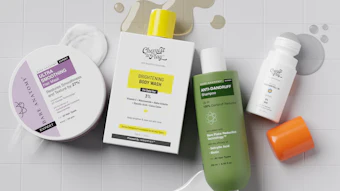
The Chilean division of L’Oréal estimates that it will grow more than 13% in 2009. Despite the downturns elsewhere, Chile’s beauty industry posted 12.5% growth in 2008. Laurent Boukobza, director of L’Oréal Chile, told the Chilean newspaper La Tercera, “We are heading into 2009 with realism, but also with confidence. We know that it won’t be easy, but we trust in the resilience of our market.” He added that certain beauty products have been successful in becoming part of the daily routine of women. “The Chilean woman is accepting more and more European norms. She has a routine of about 10 minutes where she will use two to three products every morning.”
Boukobza also hinted at plans to boost the Garnier brand, and the company also recently launched the Bí-O deodorant and is relaunching its Yves Saint Laurent luxury brand, which it acquired in 2008 from YSL Beauté Holding.
L’Oréal Chile markets more than 20 brands—including L’Oréal Paris, Lancôme, Biotherm, Helena Rubinstein, Maybelline NY, Kiehl’s, Vichy, La Roche-Posay, Armani and Ralph Lauren Polo.
Argentinean Celebrity Launches Perfume
Argentinean actress Araceli González introduced her new fragrance Sucrerie at a May event in the Alvear Palace Hotel in Buenos Aires, Argentina. The perfume, which was developed by De Nicolo laboratory, “is inspired by sexy women with attitude and very feminine.” According to González, “The fragrance includes imported essences from France, which [provide a long life on the skin]. It’s an authentic eau de parfum.” The actress’s outfit during the presentation was clearly styled with the product’s packaging in mind. The theme has a clear European influence, and the color scheme boasts shades of pink that have a very French feel to them. Sucrerie is available in premium Argentinean perfumeries in a 50-mL presentation.
Argentinean Personal Care Product Spend Increases; Downward Turn Expected
In the first quarter of 2009, LatinPanel Argentina surveyed 3,000 Argentinean homes to study consumer behavior. It found a 2.5% increase in basic goods consumption volume compared to the same period in 2008. Spending in high-income sectors increased by 10%, while middle-class and low-income spending was reduced by 2%. Personal care products accounted for the largest percent of this gain, 14%, up from 11% compared to the same period in 2008. Hair conditioners grew the most, seeing a 32% increase in consumption volume—followed by deodorants with a 22% increase. LatinPanel further foresees that the economic crisis that has already impacted other sectors will significantly affect spending on basic goods, including personal care products, during the remainder of 2009.
Color Brand Launched
In April 2009, Argentine-company Issue launched Denney Color District, a hair coloring brand, and it will be retailed in perfumeries, pharmacies and supermarkets. Issue has been a leader in budget hair color products under the Issue brand, and its new offering is intended to allow it to compete in the premium market. As part of a massive publicity campaign accompanying the new line, well-known Argentinean actress/model Andrea Frigerio has been chosen to promote the brand.
Available in 42 colors, the company expects to make the brand available in Ecuador, Uruguay, Bolivia and Chile. Issue has two production plants in Argentina, and is considered one of the principal manufacturers of hair dyes in South America.
Nivea Teams with Water Brand
Nivea joined forces with the Argentinean mineral water brand Villavivencio to promote a new hydration campaign during the South American winter season. The venture creates a very creative marketing bridge between bottled water and skin moisturizers. The idea: keep yourself hydrated—inside and out—with plenty of water and skin care products.
During a May event in Buenos Aires, Argentina, the brands presented a study by the consulting agency TNS Gallup, which showed that seven out of 10 women feel their skin is much drier during the winter season. Using this data, Nivea seeks to strengthen the position of its moisturizing products.
Argentinean Designer Presents New Fragrance
Sarkany Deluxe, a new fragrance for women developed in association with Givaudan, was introduced in May through well-known shoe and fashion designer Ricky Sarkany’s exclusive retail location in the recently opened Dot Baires Shopping Mall in Buenos Aires, Argentina. This is Sarkany’s second fragrance, and follows up on the initial success of his first fragrance, Sarkany Woman, which was awarded the 2008 International Package Design Award in New York. Sarkany Deluxe package design features Italian black chamois with studs, mimicking the style of Sarkany’s latest winter collection.
Peruvian Cosmetics Market Swamped with Knockoffs
In May, Peruvian newspaper El Comercio warned consumers that 10% of the cosmetic products on Peru’s market are imitation. The total value of the counterfeit items was estimated at $100 million by the Peruvian Cosmetics and Hygiene Committee (PCHC), a division of the Lima Chamber of Commerce. Committee president, Ángel Acevedo, said that, generally speaking, the items most knocked off are shampoos, talcum powders, fingernail polishes and lipsticks, but French perfumes lead the list of knockoffs.
To produce these products, counterfeiters substituted ingredients similar in appearance and consistency. Shampoos were found to be a mixture of detergents and water, and plaster was used to replace talcum powders. PCHC warned consumers that some of these substitutions are dangerous—a nail polish, for example, may have been created with ingredients used in car paints.
Cristina Kroll is a business journalist specializing in the beauty sector and living in Buenos Aires, Argentina. She has written for the main Argentine magazines related to the beauty business, and was a correspondent for French magazine Beauty Business News.