- There are still opportunities in mature markets, particularly in naturally positioned color cosmetics and at the low end of the mass market for those prepared to discount.
- Consumers have become increasingly attracted to new private label ranges.
- The naturally positioned color cosmetics niche has strong potential for growth due to the general resilience of natural beauty products to consumer trade down.
- Eye makeup achieved the strongest absolute growth in 2009, with a $567 million increase in its global value size. The category expanded primarily because of mascara.
Due to its status as a discretionary category, color cosmetics was one of the hardest hit globally, slipping from 5% growth in 2008 to 3% in 2009. However, despite the continuing difficult economic climate, the desire among women to look good remains, and the size of the category is set to swell by $5 billion between 2009 and 2014. However, the main issue for the industry is that this growth will be more than a third lower than the absolute growth of $8.5 billion achieved 2004–2009.
Slower Growth in North America; Western Europe
Color cosmetics players sitting tight and hoping things will pick up in traditional key markets might be disappointed. The U.S. is set to see $120 million absolute growth 2009–2014, just 16% of the figure it produced 2004–2009. A similar picture will be seen in the U.K. (absolute growth 2009–2014 will be 45% of that seen 2004–2009) and Germany (57%).
However, there are still opportunities even in these markets, particularly in naturally positioned color cosmetics and at the low end of the mass market for those prepared to discount.
Budget Brand Launches Drive Growth in Mature Markets
Color cosmetics has traditionally had very low levels of private label sales. Since the onset of the recession, however, with both high-end and mass products impacted, consumers have become increasingly attracted to new private label ranges.
In 2010, there were quite a few notable budget cosmetic launches. U.K. drugstore Superdrug introduced a budget cosmetics range called MUA (Makeup Academy), costing £1 per item. Topshop in the U.K. and Payless shoes in the U.S. both launched successful private label color cosmetic ranges. U.K.-based retailer Accessorize, too, introduced four private label makeup collections. The ranges launched by clothing and shoe retailers mark a growing trend for fashion retailers to diversify their product offerings.
Despite these prices perhaps being low enough to make consumers question the quality, it seems, for now, that price alone is enough of a lure to persuade consumers to try out the products. Whether or not they keep coming back is another question.
Natural Color Cosmetics Have Potential to Drive Industry Growth The naturally positioned color cosmetics niche is in its infancy, but has strong potential for future growth thanks to the general resilience of “natural” beauty products to consumer trade down. P&G has tapped into the growing consumer demand for naturally positioned beauty products with a new range of color cosmetics under the Cover Girl makeup brand—NatureLuxe, which launched in the U.S. in November 2010. While not all of the products in the range are claimed to be natural, NatureLuxe is one of the first naturally positioned color cosmetic lines from a major beauty company and demonstrates the continual transition of natural beauty into the mainstream.
Natural and organic color cosmetics are nothing new, with the likes of Dr.Hauschka having been around for years. However, the prices of many of these brands are often at the premium end of the scale, and their distribution remains quite limited—for example, a bronzer in the U.S. costs approximately $36.95 and a four-shade eye shadow set $43.90. This means that a gap in the market for more affordable and widely available natural color cosmetics has existed for a while. The average price of NatureLuxe is set to be around $11.99 per product, and the line will retail in drugstores throughout the U.S.
Innovation in Mascara to Drive Eye Makeup Growth
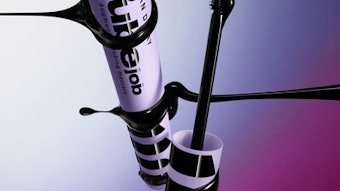
Eye makeup achieved the strongest absolute growth in 2009, with a $567 million increase in its global value size. The category expanded primarily because of mascara. Technological innovations within mascara and higher prices aided value growth. Following successful premium launches—such as vibrating mascaras from Estée Lauder and Lancôme and Givenchy’s wand, which resembles a spiky ball—Dior is shaping up to launch Diorshow 360, a rotating wand. These launches have a tendency to filter down to the mass market, and should help to maintain consumer interest in eye makeup.
Lash Enhancer Sparks Trend; Potential Growth in Eye Makeup
Latisse from Allergan is one of the major talking points in the lash product category—the product spurred the growth of other lash growth products on retail shelves. Latisse is not inexpensive, however, and the price is enough to make consumers think twice—it is available in topical and pill format at a cost of $120 per tube. Allergan is currently the only company with the right to use bimatoprost, the active ingredient in Latisse that stimulates growth. Despite this, Latisse has spawned a wave of new lash-enhancing products that all claim to thicken lashes, if not actually stimulate growth. The most recent launches include a lash-boosting product from Rimmel called Lash Accelerator and Grow Luscious by Fabulash from Revlon.
Although the use of Latisse should mean that a person no longer needs to wear mascara, its prohibitively high cost and limited global availability mean that it is unlikely to trouble mainstream eye color cosmetic manufacturers just yet. For the time being, other brand owners still need to work hard to convince consumers that their products will actually produce noticeable results—the justification for Latisse’s high price is that its efficacy is undisputed. If Allergan were to lose the exclusive rights to bimatoprost, the market would very likely be awash with less expensive products from rivals containing the ingredient—and lash boosters could move from a niche status further into the mainstream.
Dynamic Nail Polish Sees Influx of Launches
Nail polish was the fastest-growing category in 2009, registering more than 8% current value growth globally, an improvement on the 7% achieved the previous year. The do-it-yourself trend helped drive 9% value growth in nail products in 2009. Budget-conscious women continued to give themselves manicures at home instead of going to salons. As a result, after years of sales declines, nail products turned in a positive sales performance in 2008 and 2009.
Nail polish benefited from new launches and quickly changing fads for particular shades, especially nude colors in Western Europe. As a result of the growth in sales, nail products saw a flurry of company activity, with Coty acquiring the OPI nail polish brand as a prominent example. OPI has recently had several high-profile launches, including a line of polishes launched in conjunction with Canadian pop star Justin Bieber. The polishes are all named after his hit songs and retail solely in Walmart.
Outlook
The position of color cosmetics will remain relatively precarious until 2014. Consumers are expected to slowly increase their spending on color cosmetics as employment and consumer confidence rises. The still rather weak economy poses a threat, but early signs of a return to form for consumer spending in 2011 are encouraging for the category.
Carrie Lennard is a research analyst at Euromonitor International.