- The combination of transdisciplinary knowledge and different thinking styles may be the most productive model for innovation and creativity in the workplace.
- Real creativity and real innovation seem to have been created by those who stand at the intersection of the humanities and science.
- Creating an innovative working environment likely means less constraints and allowing employees to work on a range of different projects with different focuses.
- Creativity requires both divergent thinking—the generation of fresh ideas, and convergent thinking—channeling those ideas into a practical solution.
Despite the fact that Roger Sperry’s preparatory work for the award of the Nobel Prize in 1981 gave clear indications on different thinking styles,1 this message—of the brain processing different stimuli differently—may not have been clearly understood by business industry members—including those in the beauty industry—until the recent past. Instead, many times, groups of people deemed creative and/or innovative have been gathered in ivory towers—and then have failed to be sufficiently productive.
This article explores that phenomenon and suggests why moves such as those that encourage innovation through a collaboration of transdisciplinary knowledge may hint at a more productive model for the future.
Barriers to Holistic Innovation?
In an excerpt from GlaxoSmithKline’s (GSK) website, the pharmaceutical giant describes its early discovery research environment.
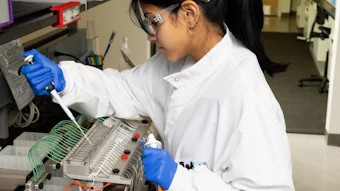
“In our early discovery research, we have created a new entrepreneurial research environment, where those closest to the science make the decisions. These mini-biotechs, or Discovery Performance Units (DPUs), are small teams of multidiscipline scientists—between seven and 70—all working together and concentrating on one disease mechanism or scientific area.
“Each DPU is responsible for discovering and developing potential new medicines in its particular area and seeing those through to early-stage clinical trials. They are also responsible for developing a three-year business plan and managing a budget, being held accountable for the final decisions and deliverable.”2
This—using “multidiscipline” researchers—is an interesting development that has shown good initial results per GSK’s annual results report for 2011.3 However, it does perhaps fall short of that strive for holistic innovation in that, despite drawing on a pool of very talented scientists, it still fails to recognize different thinking styles. It is likely that the DPUs as mentioned are predominantly left-brain thinkers—highly qualified scientific thinkers who may occasionally, at critical points in time, be so immersed in the details that they miss a crucial point. They may then miss a “Eureka!” moment. Why is this?
What Fuels Creativity?
In a study published in Behavior Genetics in 1973, researchers set out to investigate the possibility of a genetic component in creative ability. The research in 117 pairs of twins failed to provide any convincing evidence of a genetic component in creativity.4 Thus we must look elsewhere for clues to determine what fuels innovation—and more particularly, holistic innovation.
The death of Steve Jobs has led to much discussion on what was behind this man and what enabled him to make such an impression on so many people. Author Walter Isaacson, who knew Jobs perhaps as well as anyone, describes his success as an interesting distinction between intelligence and genius. Jobs valued experiential wisdom over empirical analysis, intuition over “Western rational thought.”
Isaacson compares Jobs to Benjamin Franklin, who was able to intuit the relationship between different things, such as flying a kite in a thunderstorm and electricity. This art of applied creativity seems to link quite different men operating in quite different times. Real creativity and real innovation seem to have been created by those who stand at “the intersection of the humanities and science,” according to Jobs. But the questions is, how can beauty business organizations create environments to produce innovation that can have a real impact?
Left and Right
First, perhaps it is useful to elaborate a little further on the way the brain seems to work. It has been established that the left side of the brain is the logical side, working to solve problems in a straightforward, rational way. Jonah Lehrer argues that the right side flashes into life only if you are stumped, acting like an organic search engine to reassemble previously unconnected thoughts, memories and unconnected events.5 Logic flies out of the window, and essentially the solution mysteriously appears to hand. Although Lehrer does not specifically make this point, it is likely that those who accept that this can happen are more likely to be comfortable with ideas that are generated in this way. There may be no logical reason for the idea, but it could be right; however, scientists may find this difficult.6
In Imagine, Lehrer goes on to map conditions that can create a favorable environment for companies and societies to be innovative. According to Lehrer, employee freedom and mingling appear to be key—as evidenced by the environments at 3M and Pixar—with all divisions, departments and disciplines adding ideas. This promotes the apparent hypothesis that ideas appear to come out of the blue, and when they occur, these epiphany moments come to a conclusion that is crystal clear.
Engaged Environment
Research on compound remote associate problems from scientists such as Mark Jung-Beeman of Northwestern University has shown that the brain (parts of the cortex) enables people to make sense of metaphors.5 Basically, the left brain sees the trees while the right brain sees the wood.
To promote this in companies, it is important to create relaxed environments that foster creativity. Blue rooms seem to foster innovation—relaxed associations. People need to have control over their own focus, and companies must trust their employees to pursue worthwhile opportunities and projects. In fact, Lehrer hypothesizes productive moments may come only after you stop thinking of them.5
Thus more is not necessarily better. Too much stress reduces creativity, while too little blocks may block it. Companies also must be aware of the dangers of burnout, particularly in non-routine tasks. Narrow input will produce narrow output, but exposure to unfamiliar perspectives may favor creativity.7 Creativity seems to be stimulated by mood swings and “getting out of your head.” Thus, reducing inhibitions appears to prompt creativity.
People are hardwired to avoid error, but perhaps by being half-conscious of some thoughts, we can stimulate our natural creativity. Perhaps a childlike exuberance can prompt innovation. However, the environment must permit this—chained to the desk with a rote list of duties to carry out is likely not the way to get innovative results.
A Wandering Mind
There seems to be a growing concern that innovation is slowing down at the national and corporate level in the United States and Europe,8 and certainly diminishing R&D returns are behind moves such as those by GSK and others in similar industries and other sectors. There also are growing concerns that economic power is more quickly switching from West to East. However, a key shift may be that true creative imagination may reside in the West (as demonstrated by Steve Jobs particularly), and the use of this creativity may require being stimulated by less rigid education systems. Organizations should not miss the opportunity to harness the competitive advantage inherent in their work forces. But what is the best way this can be achieved?
Dickens wrote, “There is nothing we enjoy more than a little amateur vagrancy, walking through London as though ‘the whole were an unknown region to our wandering mind.’” Such walkabouts may foster creative thinking.9,10
As noted in a recent Wired opinion piece, “Jobs and Dickens were of one mind” on this subject. And in fact, in a 1995 Wired article, Jobs put it this way, “Creativity is just connecting things. When you ask creative people how they did something, they feel a little guilty because they didn’t really do it, they just saw something. It seemed obvious to them after a while. That’s because they were able to connect experiences they’ve had and synthesize new things. A lot of people in our industry haven’t had very diverse experiences. So they don’t have enough dots to connect, and they end up with very linear solutions without a broad perspective on the problem. The broader one’s understanding of the human experience, the better design we will have.”11
Creativity requires both divergent thinking—the generation of lots of fresh ideas, and convergent thinking—channeling those ideas into a practical solution. The tension of toggling between right-field thinking and pragmatism is what typically leads to the greatest creative insights.
New Results
Groups of similar people are likely to produce familiar solutions—incremental adjustments rather than significant change. And people of similar thinking styles grouped together are unlikely to step out of the box. Buildings that allow natural interaction in a work environment that also promotes collegiate behavior and interaction are more likely to produce a creative environment where the sum of the whole is likely to be greater than the sum of the parts. Holistic innovation is likely to be the result of transdisciplinary interaction.
Of course, if you also happen to find another Steve Jobs, that probably won’t hurt either.
References
- www.nobelprize.org/mediaplayer/index.php?id=1606
- www.gsk.com/research/science-and-innovation/index.htm
- www.gsk.com/investors/reps11/GSK-Annual-Report-2011.pdf
- M Reznikoff, G Domino, C Bridges and M Honeyman, Creative Abilities in Identical and Fraternal Twins, Behavior Genetics, 3(4), 365–377 (1973)
- J Lehrer, Imagine: How Creativity Works, Houghton Mifflin Harcourt, New York, 2012
- http://cogprints.org/7300/1/06-Creativity-Brain.pdf
- https://psycnet.apa.org/?&fa=main.doiLanding&uid=2006-21118-011
- www.aaas.org/spp/rd/guihist.htm
- www.nytimes.com/2012/01/15/opinion/sunday/the-whirling-sound-of-planet-dickens.html?_r=1
- https://hbr.org/2012/03/creativity-lessons-from-charle
- www.wired.com/opinion/tag/creativity/
All references accessed Apr 13, 2012.
A graduate of London University, David Elliott gained postgraduate qualifications in export marketing. After 13 years in UK and international marketing roles, he moved to Singapore, and later Indonesia, in increasingly senior positions. After returning to the UK in 1993, he gained an MBA from the University of Hull and runs a successful UK and international consultancy. Clients have included Seven Seas, Johnson & Johnson, GlaxoSmithKline, Reckitt Benckiser and Boots. Throughout his career, he has had a keen interest in the way consumers respond to brands, which has led to cooperation with research practitioners and academics in areas such as low involvement theory and the role of brand engrams.
Rob Barker is the director of Shopper Insights Ltd., an Oxford, U.K.-based business that works with clients and partners who see a commercial advantage in understanding how communication and design influence attitudes and behaviors.