Debut has launched DermCeutical EDL, a topical bioactive ingredient developed using AI, skin genomics and biotechnology that is clinically shown to tighten and firm skin by activating biological pathways commonly targeted in in-office aesthetic procedures. According to the company, the ingredient is designed to mimic the cellular effects of noninvasive and minimally invasive skin tightening treatments rather than injectable volumization or resurfacing procedures.
- Market deep dive: Skin Care’s Medspa-ration Renaissance
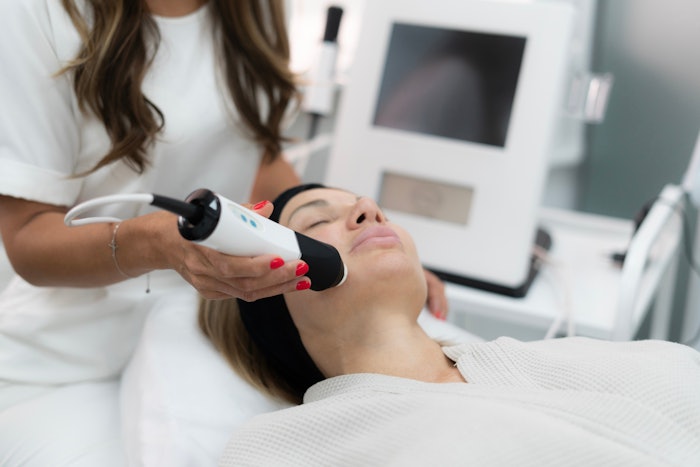
DermCeutical EDL reportedly activates dermal fibroblasts to increase elastin production, a primary mechanism also pursued by energy-based treatments such as radiofrequency skin tightening, ultrasound-based lifting devices and certain laser modalities that rely on controlled dermal heating to stimulate structural protein renewal. By boosting elastin synthesis and supporting dermal matrix integrity, the ingredient aligns with the same biological objective of these procedures: improved firmness, reduced laxity and gradual lifting without altering facial volume.
The ingredient also downregulates stress-related proteins and reverses adverse gene expression linked to aging skin. This mirrors outcomes associated with regenerative aesthetic treatments such as microneedling and fractional energy devices which aim to reset cellular stress responses and promote healthier gene signaling as part of collagen and elastin remodeling. Debut reports that DermCeutical EDL promotes long-term dermal integrity by addressing these pathways topically rather than through controlled injury or thermal stimulation.
In a 12-week clinical study, dermatologist-blinded assessments showed a 73% improvement in skin sagging and a 100% fine-line improvement rate compared to placebo. Elastin production increased six-fold and aged cell rejuvenation improved by 31%. These outcomes correspond to benchmarks often used to evaluate skin tightening technologies in clinical settings, including improvements in laxity, fine lines texture and overall firmness across the face jawline and neck.
Debut positions DermCeutical EDL as relevant amid rising demand for skin tightening driven by increased use of GLP-1 medications associated with rapid weight loss and skin laxity, as well as consumer interest in non-volumizing aesthetic results. The ingredient expands Debut’s portfolio of biotech actives intended to translate the biological targets of professional aesthetic treatments into topical formulations suitable for consumer skin care products.
Executive Q&A: How Debut is Redefining Skin Care with AI-Powered Longevity
 The ingredient rejuvenated aged cells by 31%, restoring skin structure and resilience for a more youthful appearance, per Debut.Debut
Global Cosmetic Industry recently spoke with Joshua Britton, CEO of Debut, to discuss the discovery of DermCeutical EDL.
Q: DermCeutical EDL is positioned as mimicking the cellular effects of energy-based skin tightening rather than injectables or resurfacing. What specific biological benchmarks from in-office procedures did you use to validate that this ingredient was meaningfully aligned with those treatments?
Britton: Traditional energy-based and injectable treatments work by physically stimulating the skin’s support cells and structural proteins, such as collagen and elastin. Resurfacing treatments, by contrast, depend on inflammation and wound healing to drive renewal. DermCeutical EDL was developed for its ability to activate the same key skin-support biomarkers (shown by increased elastin) while simultaneously calming inflammatory signals, as evidenced by reductions in IL-1β and IL-6. The result is visible biomechanical rejuvenation without the irritation associated with more aggressive procedures.
Q: Energy-based devices rely on controlled heat or injury to stimulate elastin. What was the key biological insight that allowed Debut to activate those same fibroblast pathways topically without thermal stress or wounding?
Britton: The breakthrough came from understanding the skin’s core repair pathways and how tens of thousands of carefully studied ingredients influence these signals at the cellular level. By identifying which ingredients activate or silence specific genetic pathways, we can stimulate the fibroblasts responsible for collagen and elastin in much the same way as professional treatments. This approach harnesses the skin’s natural healing responses to deliver visible rejuvenation without relying on physical injury or irritation.
Q: AI and skin genomics are central to how DermCeutical EDL was discovered. What did the AI uncover or accelerate in this process that traditional ingredient R&D would have struggled to identify?
Britton: Debut’s AI platform, BeautyORB, can explore an almost limitless chemical universe–over 50 billion potential compounds–and connect each one to detailed gene activity across 30,000 genes within a cell, tailored to any biological target we choose. This level of insight is simply not achievable with traditional R&D methods, where the time and cost would be prohibitive. Even at an aggressive screening pace of one million compounds per day, completing this process would take more than 100 years.
Q: As more ingredients target the same pathways as medspa treatments, how do you see this approach reshaping the traditional skin care ingredient palette built around moisturization, exfoliation and antioxidation?
Britton: Skin care is shifting from treating symptoms to addressing the biological root causes of aging and creating the foundation for longer-lasting, healthier skin. Taking a gentler, proactive approach helps support skin longevity and reduce the need for harsher treatments, such as retinoids, down the line. At Debut, we believe legacy skin care ingredients organized around longstanding core functions of moisturization (including humectants, emollients and occlusives), exfoliation (AHAs, BHAs, enzymes and retinoids) and antioxidation (vitamin C, E, polyphenols) will be upended in the coming years. The industry will evolve from maintaining skin to actively engineering and modulating its biology. Innovation will be defined by a new class of ingredients, like DermCeutical EDL, that are AI-discovered, performance-driven, pathway-specific, clinically validated, IP-protected, and brand-defining. As more ingredients target the same pathways as medspa treatments and derm offices, the boundary between skin care and procedures will blur. Brands will compete with clinics, leading to a convergence of skin care and aesthetic medicine. This will reshape how products are developed, positioned, and marketed, giving rise to new claims, hybrid protocols, and procedure-adjacent ingredient categories. Instead of focusing on how skin looks, we’ll be focusing on how it functions and how precisely we can influence that function.
Q: With rising demand for non-volumizing results tied to GLP-1 use and skin laxity, do you see procedure-inspired biotech actives like DermCeutical EDL narrowing the gap between professional aesthetic treatments and consumer skin care—or redefining where that ceiling sits?
Britton: Procedure-inspired biotech actives won’t replace in-office procedures and aesthetic treatments, but they will redefine what topical skin care can achieve, providing consumers with a spectrum of options, price points, and flexibility. Skin care, to date, has delivered surface-level improvement, while in-office treatments delivered structural change. Now, with AI-powered ingredients designed to target the same biological pathways as professional interventions, a new class of transformative, topical skin care is emerging and creating exciting opportunities for both brands and consumers. DermCeutical EDL, for example, will be applied in body care formulations to counteract the effects of GLP-1 treatments. With further biological research and understanding, innovations will narrow the gap between topicals and professional treatments – and possibly even replace them.