The development aligns with a wider shift toward inclusive packaging design, which increasingly addresses diverse abilities and neurodivergence through tactile, visual and functional features designed to reduce friction and support independence. WGSN data cited by Aptar estimates that more than 1.3 billion people will have disabilities by 2030, while 1.4 billion people will be over age 60. Neurodivergent consumers, meanwhile, are estimated to represent 15-20% of the global population.
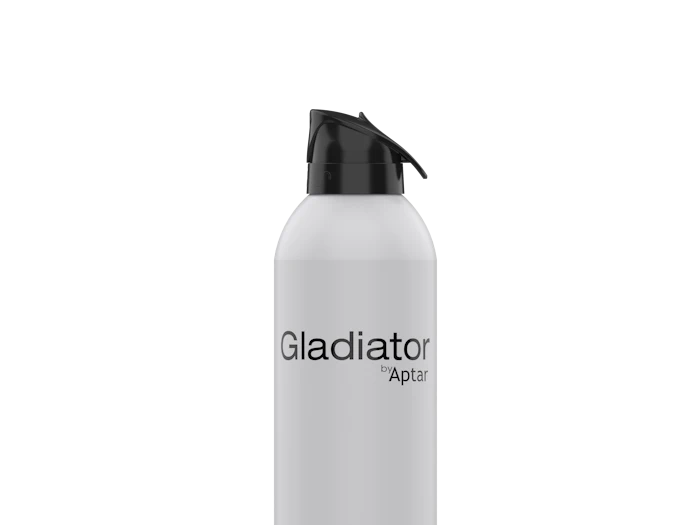
Gladiator is built around two different spray gestures, allowing consumers to actuate the package with either the thumb or index finger. Its large ergonomic finger pad, engineered curves, textured surfaces and slanted finger pad are intended to provide a secure grip and support one-handed operation. The actuator can be used by both left- and right-handed consumers and is designed to accommodate different hand sizes, dexterity levels and abilities.
Aptar’s Double Click technology is central to the system, creating an audible confirmation when the actuator is twisted between its locked and unlocked positions. The twist-to-lock mechanism provides tactile, visual and audible feedback while also helping prevent accidental dispensing. Because the actuator is hoodless, there is no traditional overcap to remove or potentially misplace.
The format, manufactured from polypropylene, also addresses material reduction. According to the company, Gladiator’s hoodless design can reduce plastic consumption by more than 50% compared with conventional hooded aerosol systems. Aptar’s broader twist-to-lock actuator collection cites up to 55% resin savings compared with a standard actuator and overcap.
The actuator is designed around all seven principles of Universal Design outlined in the supplied material:
- Equitable use: A large ergonomic finger pad, engineered curves and textured surfaces support comfortable, secure, one-handed operation.
- Flexibility in use: The actuator works for both left- and right-handed users and can be activated with either a fingertip or thumb.
- Simple and intuitive use: The twist-to-lock format reduces the number of handlings required.
- Perceptible information: Tactile, visual and audible feedback communicates the actuator’s locked and unlocked positions.
- Tolerance for error: The locking mechanism helps prevent accidental product discharge, while the hoodless design eliminates the possibility of losing a separate overcap.
- Low physical effort: A lightweight actuator and smooth, one-handed actuation are designed to reduce strain and fatigue.
- Size and space for approach and use: The ergonomic format accommodates a range of hand sizes, abilities and dexterity levels.
Beyond accessibility, Gladiator is designed to give brands flexibility in appearance. The actuator is customizable and available in two parts for personalized color combinations, while its gloss base and matte actuator can create additional visual differentiation and reinforce brand identity. Aptar describes the format as offering stand-out shelf presence while remaining compatible with a variety of spray formulations.
The technical specifications include a 1-inch mounting cup fit, compatibility with bag-on-valve and continuous valve types, and use with powder and spray formulas. The product is available in North America.
Aptar’s consumer research also points to interest in the format: an Alpha Consumer Study conducted in the U.S. in August 2020 with 132 respondents found that 94% had a positive first reaction to Gladiator, while more than 70% expressed interest in using the product. Aptar says Gladiator is particularly valued by people with fine motor skill disorders because of its easy-to-use design.
Taken together, Gladiator illustrates how inclusive packaging can extend beyond accessibility as a compliance consideration. Here, the interaction itself becomes part of the design proposition: fewer components, less material, multiple actuation options, lock confirmation and an ergonomic form designed around a wider range of users.