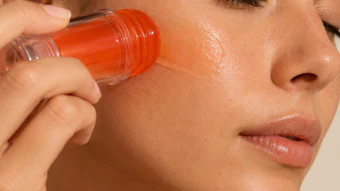
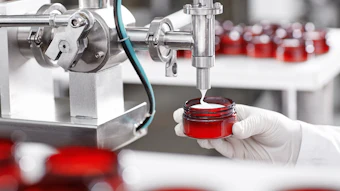
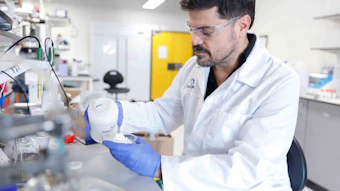
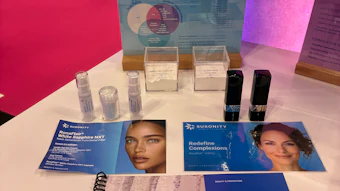
Around the world, clean and sustainable skin care brands are facing growing competition, with many struggling to differentiate themselves or substantiate eco-friendly and safety claims. At the same time, clinically driven, results-focused products continue to capture market share. A new wave of innovative ingredients is now bridging this gap—offering formulators solutions that are sustainable, safe and clinically effective, enabling brands to deliver the performance, transparency and eco-conscious credentials today’s consumers demand.
 Vantage Personal Care’s Angel-Eye EFX leverages centuries of Asian herbal knowledge to support eye-area hydration and reduce wrinkles through improved microcirculation.Prostock-studio at Adobe Stock
While these materials demonstrate how tradition and science can merge, they are far from the only innovations redefining the space. Across the industry, suppliers are harnessing upcycled waste, biotechnology and regenerative farming to expand the palette of high-performance, ethical ingredients. From bio-fermented actives that rival synthetic retinols to plant-based silicones derived from sustainable forestry, the following examples showcase the diverse range of solutions available to brands looking to prove that "clean" can also mean "clinically superior."
A Botanical Eye Contour Active That Mimics Red Light Therapy
 According to LipoTrue, its new ingredient offers results reminiscent of red-light therapy.Strelciuc at Adobe Stock
According to LipoTrue, this dual-action mechanism relaxes micro-contractions, promotes collagen synthesis and reduces expression lines, delivering visible improvements in dark circles, puffiness and early wrinkles—offering results reminiscent of red-light therapy.
A Sustainable, High-Performance Botox Alternative
 No needles required: Chemyunion’s Peptid4 B-Like is emerging as a next-generation, topical alternative to botulinum toxin for wrinkle reduction, now available to formulators seeking high-performance, sustainable ingredients. Yevhen at Adobe Stock
Beyond efficacy, Peptid4 B-Like stands out for its eco-conscious production, meeting 10 of 12 principles of Green Chemistry, using renewable raw materials, and achieving 99.86% natural origin (ISO 16128). Its cost-effective, high-purity synthesis makes it a scalable solution for brands looking to offer consumers affordable, non-invasive anti-aging results without injections, while supporting sustainability and clean beauty trends.
A Botanical Active for Sensitive Skin
BASF has introduced Ameriflor Calm, a botanical active derived from Self-Heal (Prunella vulgaris), designed to help consumers strengthen sensitive skin. Combining traditional plant knowledge with modern science, the ingredient reduces redness, supports the skin barrier and protects against environmental stressors.
Clinical studies reportedly show a 10% improvement in skin redness in just 7 days and an 11% boost in moisture retention compared to a placebo. Sourced from regenerative organic farms in Oregon and produced at a U.S. facility powered by 100% renewable electricity, Ameriflor Calm delivers sustainable, high-performance skin care for sensitive eco-conscious consumers.
A New Plant-Derived Exosome Technology for the U.S. Anti-Aging Market
 Harnessing natural cellular communication from Alpine apples, Mediterranean tangerines and Sicilian papayas, Exovive Lift reportedly delivers clinically validated rejuvenation, reportedly improving skin elasticity by 33% and visibly reducing wrinkles by up to eight years after two months of use.Anastasia Shuraeva at Pexels
Backed by regenerative medicine and longevity science, the ingredient uses trillions of extracellular vesicles as messengers to modulate proteins and miRNAs that support renewed skin vitality, outperforming conventional fruit extracts in efficacy, per DSM-Firmenich. Produced via an eco-friendly extraction process from Italian biodiversity-rich sources, Exovive Lift offers a sustainable, high-performance solution for brands targeting U.S. consumers seeking visible anti-aging results with clean, science-driven ingredients.
Skin-Firming Sesame Protein with Rapid Results
Seiwa Kasei has launched Sesaqua P, a 100% natural, upcycled sesame protein, a sustainable ingredient that combines visible anti-aging results with long-term skin health benefits. Derived from sesame oil pomace, this botanical peptide supports collagen remodeling, enhances cathepsin B activity by 17% and purportedly delivers instant wrinkle reduction in just five minutes, making it a high-performance addition to lotions, serums and firming creams.
Beyond efficacy, Sesaqua P aligns with sustainability trends, turning what was once waste into a COSMOS- and NMPA-compliant, plant-based cosmetic asset. With additional benefits including melanin suppression, moisturizing and immediate skin-firming effects, the ingredient empowers brands to meet rising consumer demand for clean, eco-conscious, and scientifically validated skin care solutions.
Redefining Niacinamide with Fermentation Technology
TRI-K’s NiaPure introduces a next-generation, low-irritation niacinamide targeting sensitive and reactive skin. Using advanced fermentation technology, NiaPure delivers high-purity niacinamide with 10x less nicotinic acid, per the company, minimizing irritation while visibly brightening skin, evening ton and regulating sebum.
Dermatologically tested, vegan, palm-free and GMO-free, NiaPure is reportedly ideal for brightening serums, moisturizers and daily care products that balance efficacy with gentle, safe use.
A 100% Biobased, High-Purity Alternative to Petrochemical Glycolic Acid in the U.S. Market
 Phycus Biotechnologies is shaking up the U.S. skin care industry with Purolic Acid, a 100% biobased glycolic acid produced via a formaldehyde-free bio-fermentation process. RDNE Stock at Adobe Stock
While bio-fermentation has historically lagged petrochemical methods in scale, Phycus’ production capabilities are positioned to meet rising demand from both small indie brands and major U.S. retailers, offering a sustainable, high-performance ingredient for the fast-growing natural and masstige skin care segments. As American consumers increasingly prioritize clean, effective, and eco-conscious formulations, Purolic says it positions brands to meet this demand without compromising on performance or safety.
“Traceability is a crucial factor for brands when selecting ingredient sources,” says A. Vikram Pandit, Ph.D CEO and co-founder of Phycus Biotechnologies. “At Phycus, we rigorously evaluate our suppliers' manufacturing processes and raw materials to ensure they are sustainably sourced. Certifications such as FSC, PEFC, and ISCC Plus play a vital role in verifying the origin of these raw materials. These certifications assure our customers that Purolic is made entirely from 100% traceable, upcycled, plant-based materials, and that it meets stringent third-party verification standards.”
Pandit continues, “Additionally, we validate our end products through independent studies. Using carbon-14 techniques, we certify the proportion of bio-based content, preventing the mislabeling of petrochemical-derived products as ‘natural’ or ‘plant-derived.’ Purolic is a USDA Certified Biobased Product, independently verified by a third-party laboratory following the ASTM D6866 standard.”
Many formulators are cautious about ingredient consistency when switching to bio-based alternatives. Global Cosmetic Industry asked Pandit what steps were taken to ensure Purolic Acid maintains the same—or better—performance characteristics as conventional glycolic acid.
“We have conducted many tests to ensure Purolic is just as efficient and effective [as conventional grades],” says the executive. “FTIR scans confirm that, molecularly, Purolic is identical to petrochemical derived glycolic acid. Additional studies, such as MTT assays confirm that it exfoliate similarly to petrochemical glycolic acid. Together, these tests validate that glycolic acid is a drop-in replacement in formulations, making the process to switch to a natural source easy and straightforward.”
Phycus claims that Purolic causes less irritation than conventional glycolic acid because it is produced through microbial fermentation, avoiding impurities introduced by traditional methods using formaldehyde or monochloroacetic acid. IL-1a studies support this claim, per the company, highlighting the benefits of their purer, natural process.
Purolic uses upcycled plant materials instead of fossil fuels to create a sustainable carbon cycle that naturally absorbs and releases CO₂, according to the company. This approach reportedly significantly reduces the environmental impact by introducing less new carbon into the atmosphere. Purolic estimates that this process can lower greenhouse gas emissions by up to 50% compared to conventional petrochemical manufacturing.
“This represents a significant advancement for the beauty and personal care industry in its efforts to reduce its overall carbon footprint,” says Pandit. “Additionally, it demonstrates that new and innovative technologies can produce essential molecules in our industry while making them more environmentally friendly.”
A Next-Gen Biofunctional Active with Unique Nanostructure
 Ultra Chemical’s Bicoalgae Blue is a biofunctional ingredient developed by Bicosome that features a specialized nanostructure system. The ingredient reportedly delivers actives deep into the epidermis and dermis, targeting senescent cells that contribute to visible signs of aging.Alena Darmel at Pexels
The ingredient combines blue microalgae (Spirulina platensis) to stimulate keratinocyte and fibroblast proliferation with resveratrol, a polyphenol known for its anti-inflammatory and mitochondrial-boosting properties. Clinical data purportedly shows enhanced cell proliferation, increased ATP production, improved wound healing, and measurable gains in skin hydration and elasticity, making it ideal for rejuvenating both young and aging skin. Globally compliant—including in China—Bicoalgae Blue can be used at 1–3% in skin and color cosmetic formulations.
A Sustainable, High-Performance Ceramide
TRI-K has introduced TerraCera Renew NP, a precision bio-fermented ceramide designed to restore and enhance the skin’s barrier while delivering superior moisturization. Clinically tested to reduce trans-epidermal water loss (TEWL) and outperform market benchmarks, TerraCera Renew NP reportedly combines bio-identical lipid technology with high-purity fermentation to ensure optimal dermal integration and bioavailability.
Boasting certifications including COSMOS, ECOCERT, NATRUE, vegan and gluten-free, the ingredient is able to strengthen the skin barrier, boost hydration and support natural skin resilience. This positions TerraCera Renew NP as a versatile solution for moisturizers, serums and barrier-repair products.