L'Oréal is expanding its artificial intelligence ambitions from the laboratory to the shopping cart.
At VivaTech 2026, the beauty giant announced a sweeping partnership with OpenAI that touches nearly every part of its value chain, from virtual makeup try-on and conversational commerce to microbiome research and generative content creation. The move positions OpenAI as a foundational partner in L'Oréal's broader "transformative AI" strategy and marks one of the most comprehensive AI deployments yet announced by a beauty company.
The collaboration is structured around two pillars: AI-powered consumer journeys and AI-powered business functions, reflecting L'Oréal's belief that AI will simultaneously reshape how consumers discover beauty products and how those products are developed.
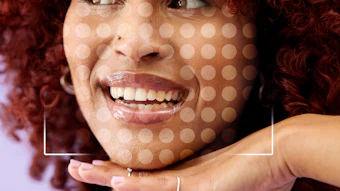
On the consumer side, Maybelline New York will bring virtual makeup try-on directly into ChatGPT through L'Oréal's ModiFace technology, creating a conversational pathway from beauty advice to product visualization. The company is also working with OpenAI to improve product discovery for brands including Lancôme and Kérastase within ChatGPT's growing commerce ecosystem.
Perhaps most notably, SkinCeuticals, CeraVe and Garnier will participate in OpenAI's global advertising pilot, placing L'Oréal among the first beauty companies experimenting with AI-native advertising at the moment of consumer intent. The initiative reflects a growing belief among marketers that large language models could become an increasingly important discovery channel, potentially rivaling traditional search and social platforms.
But the OpenAI partnership extends far beyond marketing.
L'Oréal said it is using GPT-Rosalind, OpenAI's life sciences reasoning model, to map the skin microbiome at unprecedented scale. The goal is to identify beneficial bacterial strains that could support the development of next-generation skincare products, with La Roche-Posay among the first brands expected to benefit from the research.
The company is also integrating OpenAI's latest models into CreAItech, its internal generative AI platform designed to create brand-compliant images and video while preserving each brand's heritage and visual identity.
The announcement arrives just three months after L'Oréal significantly expanded its AI partnership with Nvidia, revealing plans to integrate Nvidia's Alchemi computational chemistry platform into its research and innovation ecosystem.
That initiative focused on accelerating molecular discovery and formulation development by simulating ingredient interactions at the atomic scale. According to L'Oréal, the technology enables scientists to evaluate thousands of formulation variables virtually, potentially reducing development timelines by as much as 100-fold compared with traditional approaches. Initial efforts are focused on photoprotection and skin tone management, two strategically important categories where molecular optimization could deliver measurable performance gains.
Taken together, the Nvidia and OpenAI partnerships reveal an increasingly clear AI strategy: Nvidia powers molecular discovery and formulation science, while OpenAI powers consumer engagement, biological research, content generation and digital commerce.
The result is a vertically integrated AI stack spanning nearly the entire beauty innovation process—from predicting how molecules behave before they enter the lab to helping consumers discover and purchase finished products through conversational interfaces.
L'Oréal appears uniquely positioned to execute at that scale. The company says 73,000 employees have already been trained on generative AI tools and are supported by internal platforms including L'OréalGPT and personalized AI assistants.
For beauty industry observers, the significance extends beyond any individual technology announcement. The latest moves suggest AI is evolving from a productivity tool into core infrastructure for beauty companies, influencing everything from ingredient discovery and biological research to advertising placement and product recommendation.
As beauty increasingly becomes a data-driven industry, the competitive advantage may no longer rest solely on formulation expertise or brand equity. It may also depend on which companies build the most effective AI systems for discovering ingredients, generating insights and reaching consumers at precisely the right moment.