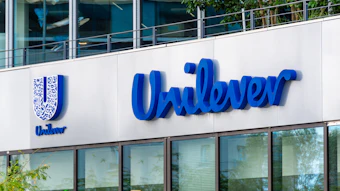
Unilever is doubling down on beauty, well-being and AI-powered product innovation in the U.S. market, even as investors continue scrutinizing the company’s planned exit from foods.
The consumer goods giant announced plans to build a $270 million Global Innovation Center in New Haven, Connecticut, a major R&D investment designed to accelerate development across skincare, personal care, fragrance, and wellness categories. Scheduled to open by spring 2029, the digital-first facility signals how aggressively Unilever is repositioning itself around higher-growth beauty and wellbeing businesses following years of portfolio reshaping.
The move comes at a sensitive moment for the company. Just hours before the announcement, Reuters reported that activist hedge fund Toms Capital had built a significant stake in McCormick & Co., which is currently pursuing the acquisition of Unilever’s food division in a deal that would create a $65 billion sauces-and-spices powerhouse.
According to Reuters, the transaction has generated investor unease around antitrust exposure, deal structure and the lengthy timeline to close, with some institutional shareholders reportedly pressuring for a faster process. Shares of both McCormick and Unilever have underperformed sector benchmarks since the deal was announced in March, underscoring lingering market skepticism around the separation strategy.
Against that backdrop, Unilever’s New Haven announcement reads as both a long-term innovation play and a clear strategic signal: the company wants to be viewed increasingly as a science-led beauty and well-being company rather than a traditional packaged foods conglomerate.
The new center will consolidate formulation, fragrance development, packaging design, consumer insights, and advanced computational capabilities under one roof, creating what Unilever describes as an AI-powered innovation ecosystem designed to speed product commercialization and category creation.
For beauty insiders, several details stand out.
The facility will house a dedicated global skin care and cleansing center, a polycultural skin and hair center of excellence focused on underserved consumer needs, a human performance lab for ingestible and wellness testing, and an in-house fragrance operation integrating perfumers, chemists, and packaging designers from the earliest stages of development.
Unilever is also leaning heavily into frontier technology language more commonly associated with biotech and advanced materials startups than legacy CPG players. The company said the site will leverage AI and emerging quantum computing capabilities to accelerate materials discovery, particularly around bioactives, sensorial performance, and next-generation formulation systems.
The location itself is strategic. New Haven has rapidly emerged as one of the Northeast’s most active biosciences corridors, fueled by Yale University, biotech startups, neuroscience research, and growing venture investment. Unilever said proximity to academic institutions and scientific talent was central to the decision.
The investment further reinforces a broader shift underway across large beauty and personal care players: the race to own the intersection of biology, neuroscience, wellness, and sensorial experience.
Increasingly, companies are positioning fragrance, texture, emotional response, and skin biology as interconnected innovation territories rather than standalone product attributes. Unilever’s emphasis on the “skin-brain axis,” microbiome science, and neuroscience-backed sensory development reflects how deeply wellness frameworks are now influencing mainstream beauty R&D strategy.
The company’s beauty and well-being portfolio already includes brands such as Dove, Vaseline, Dermalogica, Paula’s Choice, Liquid I.V., and Nutrafol—categories investors generally view as structurally higher-growth and higher-margin than packaged food.
That strategic migration away from foods has been underway for years, but the McCormick transaction has exposed some investor discomfort around execution risk and whether Unilever can fully unlock shareholder value through the separation.
Still, the New Haven project suggests the company is intent on making its priorities unmistakable. Rather than incremental renovation, Unilever appears to be building the infrastructure for a future where AI-enabled formulation, bioscience partnerships, wellness convergence, and accelerated innovation cycles become core competitive advantages in beauty and personal care.
For the industry, the message is equally clear: the next era of beauty competition may be fought less on marketing alone — and more on who controls the strongest scientific and computational innovation ecosystems.