Prestige beauty closed 2025 with a clear message: consumers are paying more, buying smarter and rewarding brands that balance performance, pleasure and cultural relevance. New data from Daash Intelligence’s 2025 Beauty, Wrapped reveals how makeup, skin care, fragrance, hair, and bath and body converged around a shared set of growth drivers—while still expressing category-specific truths.
Below are 10 essential takeaways shaping the beauty industry right now.
1. Premiumization Is No Longer Category-Specific
Average prices rose across every prestige category in 2025—makeup (+12.2%), skin care (+11.5%), fragrance (+13.8%), hair care (+10.9%), and bath and body (+11.6%). Consumers didn’t trade down; they traded up selectively, signaling confidence in value-backed premium stories.
2. Makeup Reclaimed the Crown
Makeup ranked #1 overall in prestige, delivering an estimated $7 billion in sales and 42.1% market share. Core face categories—foundation, concealer, mascara—drove volume, but setting sprays and powders dominated hero SKU status. Performance fundamentals won.
3. Skin Care Is Smaller—but Stickier
Skin care ranked #2 with $3.6 billion in sales, but its strength lies in loyalty and replenishment. Moisturizers, serums and lip care led, anchored by hydration, nourishment, and brightening claims—proof that skin health remains a daily ritual, not a trend cycle.
4. Lip Products Are a Cross-Category Powerhouse
Lip balms, tints, and treatments appeared as top performers in both makeup and skin care. This blurring confirms lips as a hybrid zone—where sensorial pleasure, visible payoff, and care credentials intersect.
5. Fragrance Is Fueled by Gourmand Comfort
Fragrance secured $2.8 billion in prestige sales, with vanilla, marshmallow, amber, and jasmine dominating. Hair and body mists and giftable formats outperformed, signaling demand for approachable, repeatable scent experiences rather than intimidation-level luxury.
6. Hair Care Is Tools-Led, Not Formula-Led
Unlike other categories, hair care’s top SKUs were devices, not consumables. Styling tools drove share, while benefits like hydration, repair, and strengthening remained table stakes. Technology—not ingredients—was the growth lever.
7. Bath and Body Is Small—but Strategically Mighty
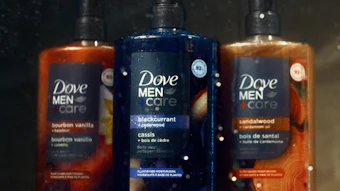
At 5.7% of prestige share, bath and body is the smallest category—but one of the most emotionally resonant. Hydration, exfoliation and repair paired with fragrance-forward creams and sanitizers point to everyday indulgence as the value proposition.
8. Peptides Are the Universal Signal Ingredient
Peptides surfaced across makeup, skin care, and hair care, reinforcing their role as a safe, science-coded ingredient that travels easily between categories and benefit sets. Hyaluronic acid and vitamin C continue as essential co-stars.
9. Gift Sets Are No Longer Seasonal Only
Holiday data shows gift sets driving disproportionate visibility and velocity—especially sampler formats in fragrance and minis in skin care and makeup. Trial is now a core acquisition strategy, not just a Q4 tactic.
10. Sensory Performance Beats Abstract Claims
Across all categories, top-selling products combined immediate sensorial payoff (texture, wear, scent) with clear functional benefits. Abstract positioning lost ground to products that feel good instantly and work fast.