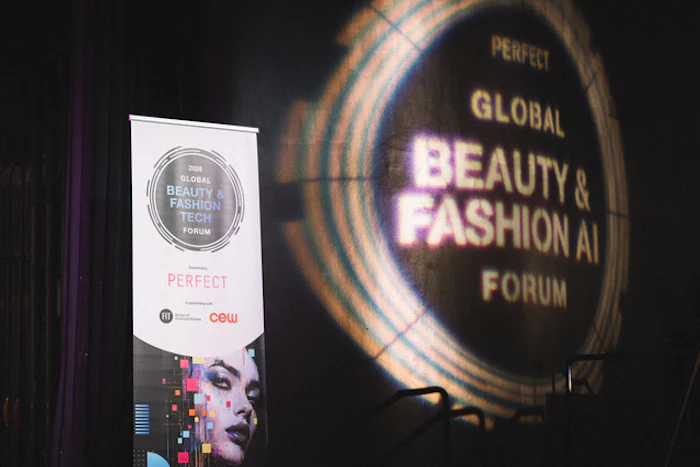
On September 28, 2026, Perfect Corp., a technology company that provides AI-powered skin analysis and virtual try-on tools for beauty and fashion businesses, hosted its eighth annual forum at the Fashion Institute of Technology to explore AI’s growing influence on beauty and fashion discovery, research, recommendations, and purchasing decisions. Held with FIT’s School of Graduate Studies and in collaboration with CEW (Cosmetic Executive Women), the forum explored how AI, personalization and intelligent commerce are delivering value across beauty, fashion and the consumer experience. As digital tools become part of in-store shopping and skincare consultations, human insight is essential to understanding what these experiences should offer users.
Skin, in particular, connects the dots to care. A proactive, skin-first approach, with skin longevity guiding how practitioners assess skin and consider treatment. Med spa consultant Gina Graziano, founder of The Med Spa Matchmaker, described how her work changed from teaching teams to sell services to helping them read skin imaging and use it in treatment discussions. The images give clinicians and patients something to examine together and a way to discuss changes in skin over time.
Larissa Jensen, senior vice president at Circana, highlighted how AI helps consumers understand ingredients, choose products and use them in the right order in a skincare routine. Guiding customers to use products properly helps brands build loyalty beyond the first purchase.

The Convergence
Human knowledge shapes technology; technology shapes how people advise, shop and care for themselves. As skin analysis and product recommendations become part of everyday beauty routines, the relationship continues beyond a single scan or purchase. Customers learn to use products and track changes, while their questions and feedback help businesses improve services.
Vendor demonstrations made the link between code and care clear by using Perfect Corp.’s technology to help users understand their skin, explore cosmetic preferences and make informed product choices. These demonstrations illustrated how businesses are able to adapt skin analysis and virtual try-on for their customers and retail environments.
Kabob Cloud showed its smart beauty shelf technology, bringing digital product guidance into stores. The system combines AI recommendations and virtual try-on with shelf-label lighting to help shoppers find the matching product. Deploying these experiences to retail stores relies on how well the screens, recommendations and shelf displays work together on the retail floor.
Putting these tools into practice requires training for employees. Beauty and retail executive Meredith Epstein Goodman emphasized the need to upskill employees and the workforce as they start using new technology. Explaining that “an introductory video or webinar is not enough to help teams use a new tool proficiently.”
AI Positive
Lower development costs enable more founders to create digital services for customers, using their product knowledge and understanding of customer challenges.
True Beauty Lashes offers one example. Its founder, Lisa Stroud, developed LashLovr to help customers find lashes suited to their eyes. The experience combines the brand’s matching approach with AI face analysis and virtual lash try-on through APIs. Customers receive recommendations and preview the lashes on their faces. Stroud explained that the matching follows a defined algorithm linking eye shapes to lash features, keeping the brand’s knowledge of lash fit central to its recommendations. The application addresses a common frustration in a category often presented as one size fits all: knowing which lashes will suit a customer’s eyes.
Transforming customer knowledge into a business requires funding and strong relationships. The Startup World Cup NYC Regional, part of Pegasus Tech Ventures' global competition, highlighted this aspect at the forum. Beyond competing for a place in the global finals, where a $1 million investment prize is at stake, entrepreneurs had opportunities to connect with investors and potential partners.

Beauty for Diversity
Esthetician Ian Michael Crumm founded Boys in Beauty, a community working to broaden men’s participation in beauty. He noted that men interested in skincare often encounter beauty advertising framed around either makeup or narrowly masculine concerns. Many are still learning basic skincare. He stressed the need for education alongside product recommendations, especially for customers unsure where to begin.
Crumm described how skin scanning and tracking changes can give men another entry point into skincare: an interest in skin health. This includes questions about ingredients and treatments, and a need for clear explanations from trusted practitioners and educators. Making beauty more accessible involves both inviting people to participate and helping them understand their choices.
From Innovator to Enabler — AI Glam?
“AI is moving quickly from experimentation to meaningful implementation, and this year’s Forum showed just how much opportunity lies ahead,” said Alice Chang, Founder and CEO of Perfect Corp. “Across beauty and fashion, the most impactful applications of AI are those that solve real consumer needs, create more personalized experiences and give businesses of all sizes new ways to innovate and grow.”
New technologies have been transforming the personal care industry for some time, but “Code to Care” signals a more interactive relationship with beauty as self-care. People can see changes in their skin, explore product choices, and discuss what they learn with practitioners. Their questions and experiences help founders and practitioners decide how to use and improve these services. As beauty and self-care rituals become more tailored, technology and human knowledge are becoming more closely connected. Perfect Corp. and AI more broadly seem to be enabling that connection, giving other businesses the tools to apply their expertise to individual needs.
AI Glam? As AI tech opens new possibilities for creativity, self-expression, and self-care, as it matures, its influence grows, and so does what it enables; humans and machines become more closely intertwined in a symbiotic, multilayered relationship, connecting people and products and joining the dots between the digital and physical, our brains and bodies, our hardware and software, like never before.
How is technology shaping us, and how are we shaping technology?