Beauty is moving beyond the mirror. As technology, health, wellness and consumer behavior increasingly converge, the next generation of beauty companies is being built around a much broader definition of what it means to look and feel better. For investors, that shift is changing what makes a brand compelling and what makes it truly investable.
- More in this investor series: What Makes a Beauty Brand Investable? Prelude Growth's Alicia Sontag Weighs In.
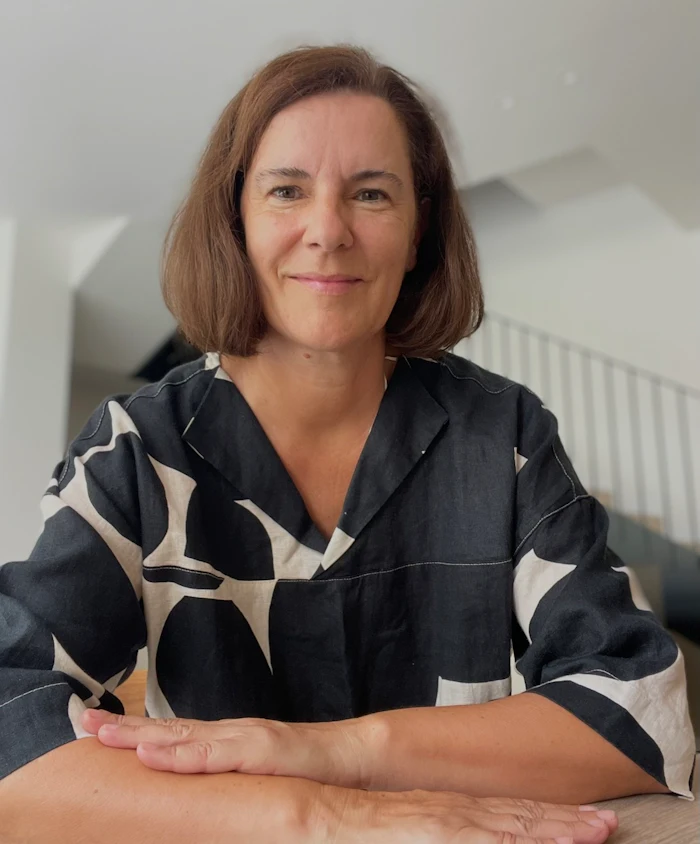
Few people are better positioned to understand that evolution than Odile Roujol, a leading voice at the intersection of beauty, technology and investment. She is the founder of the FaB Fashion & BeautyTech community, launched in San Francisco in 2017 and now connecting more than 15,000 founders and funders across 19 chapters worldwide. She also founded FaB Co-Creation Studio Ventures, investing at the seed stage in consumer technology, new commerce, sustainable fashion, conscious beauty and longevity.
A veteran beauty executive, Roujol spent much of her career with L’Oréal, Yves Saint Laurent and Chanel, including serving as managing director and president of Lancôme. She later became chief strategy and data officer at Orange before turning her focus to advising founders, investing and mentoring the next generation of entrepreneurs.
Today, Roujol sees beauty's biggest opportunities emerging where science, technology and consumer behavior meet from biomarker tracking and personalized health to noninvasive procedures, functional beauty and, perhaps most significantly, longevity and healthspan.
 "I ... see too many founders raising more than what they need as they met iconic VCs convincing them to scale fast, sign a big retailer, enter a new market/footprint. It can kill their company if it’s not the way they see their business. They must think first of what they want," says Roujol.Odile Roujol
Here, Roujol shares what makes a beauty brand truly investable, what founders often get wrong when seeking capital, and why the future of beauty may be less about looking younger and more about living healthier for longer.
What separates a promising beauty brand from a truly investable one?
Roujol: I rarely look at the size of the market. What matters is a disruption, a true innovation, and at the early stage, founders, their vision and their way to execute their vision at the right pace.
What are investors seeing today that founders may be missing?
Roujol: I’ve been investing in founders building communities, knowing their audience, learning from customers insights, improving their products by listening to them, managing their brand.
In beauty, there is a shift of behaviors. One is “data driven:” health tech platforms enabling [you] to understand your own microbiome or blood biomarkers. The other is “from inside out”: the skin is the most visible organ, longevity means staying younger and healthier for long.
Which trends are overhyped and which are underestimated?
Roujol: I won’t come back on celebrities brands. We are all aware of a few of them such as Rare Beauty (with Selena Gomez truly involved in the product development and demonstrations on social media) and Rhode founded by Hailey Bieber. The figures will change, margins if scaling with retailers vs D2C, marketing spending, and of course EBITDA in the long term, which makes it difficult to value as a company.
K-beauty is in every conversation in the U.S., and of course, the new retail concepts, such as Olive and Young, are interesting to watch as they will bet on new experiences.
Still, some ingredients are in the trends, but let’s not forget that what matters are results, and proving performance. For example, unique brands like Medicube with their growth on TikTok and Amazon, it’s in everyone’s mind at the moment.
I would be more interested by what’s happening on noninvasive procedures and medspas in Seoul, a destination for cosmetic tourism. And the best surgeons are now in esthetics and cosmetic surgery (it’s scary for people’s health on a growing older population!).
What qualities consistently show up in successful founders?
Roujol: Vision! Self awareness (being surrounded by superpowers as we can’t do everything at our best).
Being collaborative. And being obsessed by their company!
What is the biggest mistake beauty entrepreneurs make when raising capital?
Roujol: In a period where money is expensive (with high interest rates in the U.S.), and rare (80% of fundings go to AI, most VCs have left consumer tech space), I recommend to many founders to look first for business angels, and family offices, and take their time to fix the experience, have perfect products before growing too fast.
A kind of “bootstrapping” before VCs fundings: they will be stronger in later discussions.
I also see too many founders raising more than what they need as they met iconic VCs convincing them to scale fast, sign a big retailer, enter a new market/footprint. It can kill their company if it’s not the way they see their business. They must think first of what they want.
Lastly, bridge money takes time too. The ideal scenario is having new investors, adding their fundings to the current investors. Being too ambitious on valuation without the right metrics can make a founder waste a lot of time, and put the company in danger if not focusing enough on the business.
Where do you see the most exciting opportunities over the next five years?
Roujol: Longevity for sure. Our parents get older than their parents, but some of them are not in good health (mentally, or physically). We all would love to live longer, but especially healthier. What matters is healthspan.
We are all aware that diet, sleep, sport and activities help: health tech platforms, tracking your health improvements or detecting early sign of inflammation, need of supplements customized for your needs.
Again, skin is the most visible organ. What happens inside is seen outside. Of course, non-invasive procedures and topical skin care and hair care help too, and sun protection for sure.
What does the next generation of beauty innovation look like?
Roujol: A mix of the three: biomarker tracking, ingestibles and truly efficient skin care/hair care. Plus, fragrance with functional features.
What is a turn-off about a company?
Roujol: A founder defensive when we make a point in the conversation. It’s never a good sign of his/her ability to l listen to others. Best is to take notes and come back if one is not sure of what to answer, with a deep dive. Always stay courteous in the relationship.
Any tips on sprucing up an investor deck?
Roujol: I’m a big fan of the YC seed stage deck with 12 slides, about the size of the market, insights, purpose, traction, business plan, and go-to market strategy. And of course, take your time to have the perfect slide for the team.
VCs understand that a startup may have fractional roles, advisors, or an outsourced team at the early stage. What matters is demonstrating that you can attract the right people and convince them to believe in your vision.
In beauty, visuals are especially important, they help inspire people, establish the brand, and create a community that fosters a genuine sense of belonging.
Spend time on your design too, it’s part of the look and feel of the brand, same for social media, with a tone of voice, and a unique territory.
What makes you perk up when you hear it in an elevator pitch?
Roujol: Passion. Something new fixing a big problem. Disruption, not just incremental innovation.
Nancy Trent (nancy@trentandcompany) is a writer and speaker, a lifelong wellness activist, a globe-trotting trend watcher, and the founder and president of Trent & Company, a leading wellness PR firm. Trent & Company, which launched many health and beauty brands, grew out of Nancy's personal and passionate commitment to helping people live longer and healthier lives. A former journalist for New York magazine, Nancy has written seven books on healthy lifestyles, serves on the editorial boards of several magazines and travels around the world speaking at conferences and trade shows on trends in the marketplace. She is a recognized expert in PR with more than 30 years of experience creating and managing highly successful campaigns.