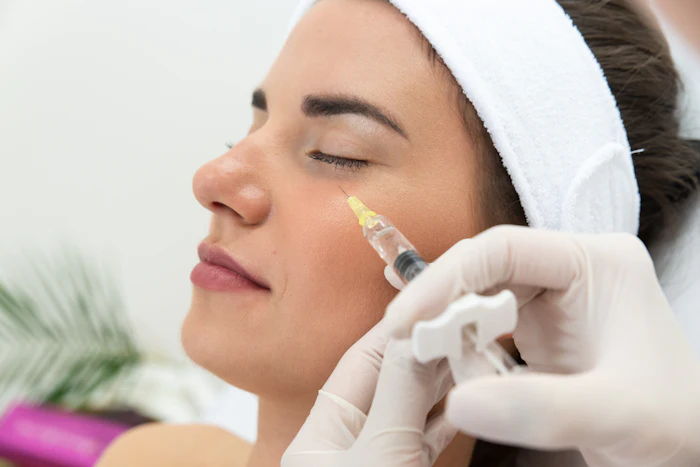
According to the American Society of Plastic Surgeonsa, cosmetic surgery in the United States has shifted sharply toward “quiet luxury,” favoring subtle, natural-looking results over dramatic transformations in 2025, with smaller breast implants, tailored facial anti-aging, and minimally invasive procedures like Botox and fillers dominating the landscape. In addition, the rise of GLP1 use has spawned an aftercare surge with patients seeking body contouring solutions like tummy tucks, arm lifts and even full-body lifts to remove sagging skin.
The Benchmarking Company (TBC) asked its panel of U.S. female beauty buyers which enhancements they favor—and the at-home skin care solutions they use that can help extend or augment those pricey procedures. In its May 2026 primary online consumer study, 4,000+ respondents revealed the procedures and skin care products they’re using now.
Procedures Trending Younger
Twenty-eight percent of women surveyed said they had had a cosmetic procedure—either surgical or nonsurgical—to enhance, reshape or improve the appearance of their face or body in the past five years. Among them, 32% of millennials and Gen Z claim to have had procedures in the past five years, compared to 28% of those in the Gen X generation and 18% of baby boomers.
Those procedures include dermaplaning (13%), Botox or other neurotoxin injections (9%), laser hair removal (5%), other laser services (5%), eyelash lift or tinting (5%), brow laminating or tinting (5%), microdermabrasion (4%), fillers such as Restylane or Juvéderm (4%), chemical peels (4%), microneedling (4%), pore extractions (4%), and medical-grade facials (4%).
 Dermaplaning was the most common procedure respondents had undergone. Marguerite De Valois at Adobe Stock
The top surgical and other procedures were:
- Lip augmentation
- Breast augmentation
- Other cosmetic dermatology
- Body contouring (CoolSculpting, Kybella, etc.)
- Breast lift/reduction
- Liposuction
- Tummy tuck
- Rhinoplasty
- Blepharoplasty
- Face lift
- Butt lift
- Neck lift
At-home Skin Care Part of Larger Procedure Picture
Thirty-four percent of those who have had procedures say that their procedures and treatments have influenced the skin care products they buy somewhat-to-very-much. That percentage is even higher among those in the Gen Z generation who have had procedures, with 46% saying special skin care products have a significant role to play.
 F-1. Percentage of respondents who have used special skin care post-procedureThe Benchmarking Co.
Respondents expect to pay the same or more for these products, with 51% paying the same as their “normal” skin care, and 43% paying more for these specialty products.
Gentle cleansers (77%) are the top category of special skin care products that surveyed consumers use pre- or post-procedure (F-1), followed by moisturizers (71%), lotions claiming to heal or repair (68%), sun protection (64%), special serums (52%), balms (36%) and masks (22%).
Goal: Extend, Enhance and Recover Quicker
The last time respondents had their procedures, 19% said they used special post-procedure skin care products to extend or enhance the efficacy of their procedure, or to aid in their recovery. Sixteen percent said they used both a pre- and post-procedure skin care product for this reason, with 5% using a pre-procedure skin care product for this reason. Younger women who have had procedures (Gen Z and millennial age) were more likely to use special skin care procedures both pre- and post-procedure (17%) than older women.
 Younger women who have had procedures (Gen Z and millennial age) were more likely to use special skin care procedures both pre- and post-procedure (17%) than older women.Raushan_films at Adobe Stock
The rising shift of using special skin care products pre- and post-procedure (as opposed to the 60% who said they just used their regular skin care products pre- and post-procedure) is understood by users as a way to maintain results between treatments (50% use special skin care products pre- and post- for this reason), to extend the benefits of those treatments (49%), and to prepare the skin before their treatments (25%).
Shrinking Procedure Downtime is Important
Seventeen percent use special skin care products pre- and post-procedure to decrease downtime after treatments (T-1).
 T-1. Typical downtime experienced by responsesThe Benchmarking Co.
Of those who say they experience any downtime post-procedure, surgical procedures naturally take longest to recover, but there is still some downtime experienced even with minor cosmetic procedures that patients are looking to minimize.
Are Her Pre- or Post-Skin Care Products Working?
Women who use special skin care as part of their cosmetic procedure journey are in large part happy with their outcomes (F-2).
 F-2. Percentage of respondents who have achieved pre- or post-procedure benefits with special skin care productsThe Benchmarking Co.
The top benefits they strive to achieve from these skin care products are to accelerate healing and repair, to calm the skin, to provide an ultra-gentle and non-irritating salve to the skin, to protect their results, and to reduce downtime.
Brands She Uses & Ingredients She Craves
Skin care brands she’s used for pre- or post-procedures varies widely, from doctor brands to those already consumed in the mass market. Top brands used for these purposes included LaRoche Posay (29%), The Ordinary (22%), Dermalogica (22%) and Skinceuticals (21%).
Top specialty skin care brands used:
- LaRoche Posay: 29%
- The Ordinary/Dermalogica (tied): 22%
- Skinceuticals: 21%
- EltaMD: 18%
- Alastin/Avene (tied): 13%
- Vanicream/Paula’s Choice/Obagi/Elemis (tied): 12%
- SkinMedica: 10%
- Dr. Dennis Gross/Derma E/Dermablend (tied): 9%
- PCA Skin/Vichy (tied): 8%
- Neostrata: 7%
- Skinfix: 6%
- RescueMD/Colorscience/iS Clinical (tied): 5%
- Oxygenetix/Rejuvala/Allies of Skin/Revision skin care/Skinbetter Science/HydroPeptide/Nurse Jamie (tied): 4%
- Co2lift/Replenix/Babor/Skin Gym/GlyMed Plus/Ocucyn (tied): 3%
- Epionce/Marini SkinSolutions/Neocutis/Alumier/Yon-ka/Cutagenesis/FixMySkin/LaserSense/Reliefacyn/Sente/Cyspera/Glytone/Vivier (tied): 2%
- CLn/Victor Michael/Lasercyn/Teoxane (tied): 1%
When she is buying these brands, they are usually from a combination of both her doctor and regular retailers (43%), with only 22% buying only from her doctor, dermatologist or other medical professional.
 Ingredients play an important role in her pre- and post-procedure skin care purchasing decisions, with these soothing ingredients she finds most appealing: hyaluronic acid (37%), aloe vera (33%), ceramides (23%), peptides (21%), collagen (20%), retinol (19%), antioxidants (13%), niacinamide (13%), vitamin E (12%), arnica (12%), glycolic acid (11%), vitamin C (11%), exosomes (10%), alpha hydroxy acid (10%) and glycerin (10%), among others.MM at Adobe Stock
Ingredients play an important role in her pre- and post-procedure skin care purchasing decisions, with these soothing ingredients she finds most appealing: hyaluronic acid (37%), aloe vera (33%), ceramides (23%), peptides (21%), collagen (20%), retinol (19%), antioxidants (13%), niacinamide (13%), vitamin E (12%), arnica (12%), glycolic acid (11%), vitamin C (11%), exosomes (10%), alpha hydroxy acid (10%) and glycerin (10%), among others.
What’s Enticing to Tomorrow’s Specialty Skin Care Buyer?
Consumers are looking for specific, positive keywords on label and in a brand’s marketing materials when thinking about the purchase of a new pre- or post-procedure specialty skin care product. These words include repair (54%), dermatologist-tested (52%), soothe (41%), medical-grade (40%), hydrating (40%), heal (30%), calm (29%), clinical (28%), gentle (27%) and rejuvenate (23%). Of course, brands will need to have regulatorily-sound language on skin care products classified as cosmetics (be wary of repair, heal, etc.)
Top words she likes seeing on label for pre- and post-procedure specialty skin care:
- Repair: 54%
- Dermatologist-tested: 52%
- Soothe: 41%
- Medical grade: 40%
- Hydrating: 40%
- Heal: 30%
- Calm: 29%
- Clinical: 28%
- Gentle: 27%
- Rejuvenate: 23%
- Non-irritating: 20%
- Recover: 18%
- Results-driven: 16%
- Revitalize: 12%
- Accelerate: 8%
Although a product’s label can claim great benefits, she relies on the real-world opinions of her medical professionals (86%) and claims by fellow skin care buyers (84%) as her top purchase influencers.
 F-3. Top influences that encourage specialty skin care purchasesThe Benchmarking Co.
Providing the proof that consumers seek—in the form of consumer claims from independent third-party research, as well as positive product reviews from consumers like them—will give them permission to explore the pre- and post-procedure skin care products that have piqued their interest.
Does your brand have its consumer claims ready for her review?
Jennifer Stansbury (www.benchmarkingcompany.com) is co-founder and managing partner at The Benchmarking Company. The Benchmarking Company provides marketing and strategy professionals in the beauty and personal care industries with need-to-know information about its customers and prospects through custom consumer research studies through its 250,000+ female PinkPanel database, focus group, and consumer in-home use testing (IHUTs) for claims substantiation and risk mitigation.
FOOTNOTES
ahttps://www.americanboardcosmeticsurgery.org/blog/undetectable-cosmetic-surgery-trend/