GLP-1 weight loss drugs are reshaping not only metabolic health, but the future of skin care. As usage of medications like Ozempic, Zepbound and compounded GLP-1s accelerates across the U.S., dermatologists and consumers alike are confronting an unintended consequence: rapid, medically induced weight loss can visibly age the skin. Facial deflation, collagen loss, dryness, laxity and hair shedding—now commonly referred to as “Ozempic face”—are emerging as defining aesthetic concerns of the GLP-1 era. In response, a new category of science-driven, medical-grade skin care is taking shape, designed specifically to counteract the structural and biological changes caused by accelerated fat loss and metabolic stress. From volume-restoring serums to biotechnology-forward ingredients once reserved for clinical medicine, beauty brands are racing to develop targeted solutions for what may become the fastest-growing skin aging challenge of the decade.
The Rise of GLP-1 Drugs and the Beauty Industry's Response to "Ozempic Face"
GLP-1 usage is becoming widespread.
According to NPR, the number of people taking drugs for weight loss more than doubled over the past year and a half1. About 12.4% of American adults have been or are on a GLP-1 drug1, and even more versions and formats are expected to be released. While oral GLP-1s are still under FDA review, other kinds of GLP-1s are being imported from different countries to broaden consumer choice, making the drug more accessible to the average consumer.
 About 12.4% of American adults have been or are on a GLP-1 drug, and even more versions and formats are expected to be released.Tatsiana at Adobe Stock
GLP-1, which stands for glucagon-like peptide-1, is a natural hormone that regulates blood sugar, appetite and digestion. GLP-1 agonists are a class of medications that mimic the hormone, helping people manage and lose weight quickly. Perhaps the most popular of these drugs is Ozempic.
But while the rise of Ozempic is clear, the decline of fat loss isn't so transparent. "Ozempic face" is the newest skin concern, a popularly coined term to describe the changes in the face that come from rapid, medically stimulated weight loss.
The changes include:
- Decreased facial fat
- More visible signs of aging
- Loss of skin elasticity and collagen
- Skin dryness
"Ozempic face" doesn't stop at the face, though. It also affects any area where skin is present—that includes the lips, body and scalp.
To address this, beauty companies are creating GLP-1 targeted products to reduce the signs of aging caused by medical weight loss. Detailed below are some of the brands and products at the forefront of this trend, featuring medical-grade products and intense plumping technology.
Weight Loss Drugs Can Age Skin; XOSM Technology May Help.
Image Skin Care has launched its all-one-treatment VOL.U.LIFT, featuring a GLP-1 4D Skin Rebound Complex. The formula was developed by plastic surgeon Marc Ronert, Ph.D., to address the four visible side effects of GLP-1-induced rapid weight loss on facial skin:
Deflation
Deep wrinkles
Dehydration
Density Loss.
Formulated based on research into how skin responds to rapid weight loss from GLP-1 usage and similar therapies, the formula is designed for both corrective and preventive use.
 Formulated based on research into how skin responds to rapid weight loss from GLP-1 usage and similar therapies, the formula is designed for both corrective and preventive use. IMAGE Skincare
"We are seeing patients on GLP-1 agonists lose up to 30% of muscle and connective tissue as a result of rapid weight loss. This impacts both the body and facial skin. The key is to supplement a protein-based diet with topical skin care that stimulates cell activity using clinically proven ingredients to jumpstart cell function, specifically addressing mechanisms that generate collagen, strengthen the skin structure and increase hydration," said Raja Sivamani, M.D., an integrative dermatologist who has partnered with the brand.
XOSM-Powered Prevention
Powered by the brand's XOSM technology, along with L-Ornithine amino acid to increase fatty tissue volume, the treatment is said to reduce the appearance of structural aging and plump the skin. The treatment is comprised of the following ingredients:
 Powered by the brand's XOSM technology, along with L-Ornithine amino acid to increase fatty tissue volume, VOL.U.LIFT is said to reduce the appearance of structural aging and plump the skin.Liubov Levytska at Adobe Stock
- Bakuchiol: A powerful antioxidant known for its anti-aging and soothing benefits, bakuchiol visibly reduces lines and wrinkles, improves the appearance of skin firmness and texture quality
- XOSM technology: Our proprietary, patent-pending technology that boosts formula performance while protecting and nourishing the skin’s barrier with smart-encapsulated antioxidants, ectoin, vitamin C and astaxanthin-rich micro-algae
- L-ornithine amino acid: A non-essential amino acid, L-ornithine amino acid visibly plumps skin, improving the appearance of sunken, deflated skin and promoting a fuller-looking face
- Kangaroo paw flower: Rich in ferulic acid and linoleic acid, Kangaroo Paw Flower helps to visibly firm skin, reducing the appearance of sagging, lines and wrinkles
- Plant collagen fragments: Biomimetic to human collagen fragments, plant collagen fragments visibly lift skin, improving sagging and deflated skin
- HA silanol: A next-generation hyaluronic acid combined with silicium improves hydration, plumping the skin to restore the appearance of volume
According to clinical trials, the treatment claims to show visible results in two weeks.
- 20.1% increase in facial volume
- 22.5% increase in firmness
- 23.2% increase in net elasticity
- 20.7% decrease in wrinkles
- 21.8% increase in hydration
The Ordinary's Powerful Plumping Serum
Considered by many to be a GLP-1 plumping solution, the Ordinary's Volufiline 92% + Pal-Isoleucine 1% Plumping Serum is a classic volume loss solution that targets fine lines, wrinkles, loss of firmness and elasticity.
With a concentrated serum containing 92% Volufiline, a known technology commonly used to increase skin volume and plumpness. It also includes 1% Pal-Isoleucine, a supporting lipoamino acid that helps to impart volume by supporting skin structures responsible for a naturally plump look.
 The Ordinary's Volufiline 92% + Pal-Isoleucine 1% Plumping Serum is a classic volume loss solution that targets fine lines, wrinkles, loss of firmness and elasticity. golubovy at Adobe Stock
Together, the serum is designed to be applied to targeted areas that appear sunken or hollow, including under the eyes, on the temples and around the cheeks and smile lines, for visible plumping and smoothing.
Ingredients include:
- Hydrogenated polyisobutene
- Caprylyl glycol
- Polyglyceryl-3 stearate
- Palmitoyl isoleucine
- Anemarrhena asphodeloides root extract
- Rhus succedanea fruit wax
- Tocopherol
Renewal and Skin Hydration Combat Signs of Weight Loss Aging
BodyLogicMD, a provider of bioidentical hormone replacement therapy (BHRT), integrative medicine and weight loss treatment, announced the launch of a medical-grade skin care line featuring four anti-aging products for skin renewal and hydration.
 Founded in 2003, BodyLogicMD specializes in bioidentical hormone replacement therapy (BHRT), integrative medicine and weight loss.BodyLogicMD
- EyeRevive reduces dark circles and puffiness, smooths fine lines and wrinkles, firms and tightens aging skin, brightens aging skin and reduces inflammation.
- FirmLift promotes cellular regeneration, reduces the appearance of fine lines and wrinkles, as well as uneven skin tone. It also provides tightening effects and fights skin sagging.
- HydraPeptide boosts collagen, provides hydration, promotes skin moisture and protects against moisture loss for softer, smoother skin.
- RadianceRenew removes dead skin cells from the skin's surface, helps prevent moisture loss and is paraben-free for daily use."
Medical-Grade Skin Collection For Anti-Aging Transformation
Obagi has released four medical-grade products designed to sculpt and lift skin to prevent signs of aging, sagging, discoloration and nourish dehydrated skin. The brand claims the products can diminish the appearance of premature aging, photodamage, skin discoloration, acne and sun damage as well.
All products contain the brand's Bi-Mineral Contour Complex, an advanced ingredient technology that harnesses zinc, copper and malonate. It was specifically designed to promote the three necessary stages of developing healthy elastin.
 Obagi has release four medical-grade products designed to sculpt and lift skin to prevent signs of aging, sagging, discoloration and nourish dehydrated skin. Obagi Medical
- ELASTIDERM Lift Up & Sculpt Facial Moisturizer: This clinically proven topical formula targets sagging areas, visibly lifting and sculpting. Additional ingredients include polyglutamic acid, a peptide also found in dermal fillers, known for its superior hydrating capabilities
- ELASTIderm Firming Eye Cream: A lightweight, smooth formula that helps rejuvenate the skin around the eyes, reducing the appearance of fine lines and wrinkles, while providing a firmer look
- ELASTIderm Eye Serum: Refreshes the appearance of the delicate under-eye skin. Reduces the appearance of under-eye puffiness with caffeine. Helps support elasticity for tighter-looking skin. Additional ingredients include caffeine, an antioxidant that helps reduce puffiness under the eyes
- ELASTIderm Facial Serum: Helps support skin elasticity, resulting in firmer-looking, more resilient skin. Clinically proven results in 8 weeks
100% reported firmer-looking skin
97% noticed their skin felt more elastic and resilient
97% saw diminished appearance of crepey facial skin
Can Biotechnology Reverse Medical Weight Loss?
As GLP-1 reshapes modern metabolic health, a growing number of patients report concerns about accelerated facial aging. Dermatologists have reported a GLP-1-related rise in rapid facial deflation, collagen loss, dryness and hair shedding.
For many, rapid weight loss triggers skin-related side effects such as facial sagging, thinning skin and hair loss, leading to reduced collagen, oxidative stress, dehydration and impaired hair growth and wound healing. The four underlying mechanisms of skin deflation from medical weight loss include:
- Rapid fat loss reduces dermal structural support and elasticity
- Hormonal and nutrient shifts impair collagen and elastin renewal
- Declining ceramides weaken the skin barrier and hydration
- Catabolic stress elevates oxidative damage, accelerating visible aging
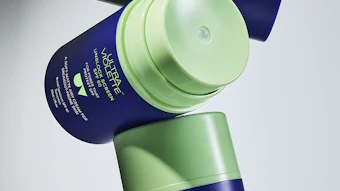
To address this issue, Bluelene has created its Fit+Firm Serum Advanced Skin Density Renewal Serum, a clinically tested serum designed to counteract skin aging associated with GLP-1 medical weight-loss treatments.
 Bluelene has created its Fit+Firm Serum Advanced Skin Density Renewal Serum, a clinically tested serum designed to counteract skin aging associated with GLP-1 medical weight-loss treatments.Bluelene
Its Fit+Firm Serum features Mblue Labs' Methylene Blue technology along with advanced Vitamin C and ceramides. According to Bluelene, the serum restores firmness, hydration and visible density. The serum claims to reduce hollowing, laxity and fine lines caused by rapid weight change, aging and metabolic stress.
Skin Restoring Ingredient Claims:
- Methylene blue: Doubles collagen production, increases skin lipid layer
- Ceramides: Restores skin barrier, supports skin density
- Vit C: Stimulates collagen, increases firmness and dermal density
- Zinc hyaluronate: Provides deep hydration and plumping
- Niacinamide: Increases ceramide production, improves elasticity
- Dimethiconol: Locks in moisture for a sculpted, dewy effect
How a Medical-Grade Ingredient Found Its Way into Skin Care
The inclusion of methylene blue, a synthetic dye with a long history of medical applications (including treating malaria and the rare blood disorder methemoglobinemia), indicates a shift in how the beauty industry and its consumers are approaching effective, science-backed skin care to treat advanced skin concerns.
The shift? A new wave of medical-grade skin care that features ingredients and concentrations previously only available through prescriptions, delivering quicker, more potent results backed by science and medical expertise.
To gather insights on the proprietary ingredient, Global Cosmetic Industry spoke to Kan Cao, Ph.D., founder and chief science officer of Mblue Labs, and Jasmin El Kordi, president and CEO, about the science behind their products.
A Dual Discovery: How A Progeria Study Gave Birth to an Anti-Aging Skin Care Ingredient
Cao, a professor of cell biology and molecular genetics at the University of Maryland, is a highly accredited scholar in the field of human aging.
Among her many accolades, Cao was named the New Scholar in Aging by the Ellison Medical Foundation (2011-2015) and received the Norma M. Allewell Prize in Entrepreneurship from the University of Maryland. Cao was inducted as a senior member into the National Academy of Inventors and is a close collaborator with the National Science Foundation, the National Institutes of Health and the Carnegie Institution for Science.
 Cao continued: "That's when I realized that methylene blue was not just for treating diseases; it could also be used to slow down or reverse human aging." kwanchaift at Adobe Stock
While researching at the University of Maryland, Cao, whose studies focused on the molecular and cellular mechanisms underlying Hutchinson-Gilford Progeria syndrome (a premature aging disease), encountered methylene blue.
Cao explained, "When we studied those skin cells from progeria, my lab discovered severe mitochondrial defects. They produce less energy, less ATP and generate more oxidative stress. So we began researching for a compound that could restore mitochondrial function in those cells as a potential treatment for progeria, and that's how we came across methylene blue, a man-made compound with a long medical history that has been shown to be a strong mitochondrial booster."
Cao continued: "What was truly surprising for us was when we tested methylene blue on our control cells. We saw significant improvements in the controls as well as the progeria cells. The cells lived longer, and their overall function was significantly improved. That's when I realized that methylene blue was not just for treating diseases; it could also be used to slow down or reverse human aging."
A Medical-Grade Migration
While the discovery of methylene blue as a potential anti-aging ingredient was made, discovery does not always ensure its pathway from medicine to beauty.
Jasmin El Kordi, president and CEO of Mblue Labs, explained, "You know, there are not a lot of ingredients that have made it from medicine into the beauty sector."
"The one we all know is tretinoin, which became retinol and its derivatives. That was an easy migration because it was an acne drug," said El Kordi. "The only other ones are minoxidil for hair loss, hydroquinone and acelaic acid, but in the last 10 years, it's really just methylene blue and tranexamic acid that have made the journey from being an FDA-approved medicine to an ingredient in the beauty market."
![El Kordi said, 'The reason [the journey from medicine to skin care is] so rare is because it's a very arduous journey from being an efficacious medicine to something that is also applicable topically to human skin.'](https://img.gcimagazine.com/mindful/allured/workspaces/default/uploads/2025/12/adobestock-345985748.jmD94dkIym.jpg?auto=format%2Ccompress&dpr=2&fit=max&q=70&w=400) El Kordi said, "The reason [the journey from medicine to skin care is] so rare is because it's a very arduous journey from being an efficacious medicine to something that is also applicable topically to human skin."Fahkamram at Adobe Stock
El Kordi said, "The reason [the journey from medicine to skin care is] so rare is because it's a very arduous journey from being an efficacious medicine to something that is also applicable topically to human skin."Fahkamram at Adobe Stock
El Kordi said, "The reason it's so rare is because it's a very arduous journey from being an efficacious medicine to something that is also applicable topically to human skin."
"We made that migration, as did tretinoin and the retinol derivatives," she said. "At the right concentration, those medicines can do amazing things to the human skin, really far more than botanicals can do, because they can mechanistically affect the skin and its dermal matrix and structure. "
"So that's why you don't see a lot of them," she said. "But those that do make it across generally come as we do, with either patents, peer-reviewed studies, clinical testing and dermatologist-approved stamps. Because it is an arduous journey, the ingredient really has to work."
Science-Backed Focus: Concentration and Purity Make the Difference
El Kordi and Cao shared that part of the journey from medicine to cosmetics includes getting the science behind the claims right. For Mblue Labs, each claim was backed by high-profile, peer-reviewed, scientific publications. The studies also looked at the optimal skin delivery concentration range for maximum safety and effectiveness.
For a product like methylene blue, while the product itself is medically safe for skin care usage, concentrations that fall outside its optimal range may have unwanted, though not dangerous, side effects. Optimal purity also matters, affecting the overall efficacy and power behind a product. Both El Kordi and Cao emphasized the importance of true science-backed testing, highlighting its power to differentiate a product from its competitors and strengthen consumer trust.
 Cao said, "The moment when we discovered methylene blue was beneficial to human skin cells, the first thing we looked at was how to make it safe for topical applications."Pichapob at Adobe Stock
El Kordi said, "You will see products that say science-backed this or that and a kind of repackaging of ingredients that are already on the market, but true innovation in the space is really rare."
Cao said, "The moment when we discovered methylene blue was beneficial to human skin cells, the first thing we looked at was how to make it safe for topical applications. In order to achieve that, we used the highest purity ingredient of methylene blue, for example, those used for IV injections. So our formulation has a 99.999% purity of medical-grade methylene blue."
"There are actually a lot of methylene blue products on the market," Cao said. "But methane blue is not a natural ingredient; it is actually a man-made ingredient, which means it has to go through the factory and chemical reactions. That means it always comes with impurity. So the purity of methylene blue is important. That's the first big step we took to make sure the ingredient could transition from a medical ingredient to a cosmetic ingredient."
A GLP-1 Weight Loss Response
As the market for GLP-1 expands, skin care brands should be ready to tackle what could soon be skin care's biggest concern: rapid weight-loss induced aging for the body, skin and scalp.
 El Kordi adds, "All of that continues to point in the direction of a growing market. There's going to be a huge amount of money spent on GLP-1s, especially as the affordability comes down." Igor_Tichonow at Adobe Stock
El Kordi adds, "All of that continues to point in the direction of a growing market. There's going to be a huge amount of money spent on GLP-1s, especially as the affordability comes down."
By 2030, J.P. Morgan forecasts the GLP-1 category will exceed $100 billion, driven equally by diabetes and obesity usage2. Goldman Sachs estimates that the global market could reach $95 billion by 20303.
Cao said, "These drugs are very complex. While the GLP-1 hormone, which regulates blood sugar and reduces appetite, does help with weight loss, it also alters the body's overall metabolism and nutrition status. Because of the appetite reduction, there are many patients who experience nutritional deficiencies during the process. [Products] like the Fit+Firm Serum can supplement the loss [of essential vitamins and ceramides necessary for healthy skin and hair] from rapid weight loss."
FOOTNOTES
2www.jpmorgan.com/insights/global-research/current-events/obesity-drugs
3www.goldmansachs.com/insights/articles/the-anti-obesity-drug-market-may-prove-smaller-than-expected