Generation Alpha isn’t waiting until adolescence to become a beauty consumer. The industry’s next generation is entering the category earlier, experimenting with routines sooner and bringing expectations shaped by social media, personalization and now artificial intelligence.
That is the clearest implication of new NielsenIQ research on Gen Alpha, reinforced by a wave of brands and retailers increasingly designing beauty experiences specifically for tweens and young teens. The company's analysis, "Gen Alpha Is Entering Beauty Earlier," points to the acceleration of beauty engagement among younger consumers. The finding arrives alongside a June study commissioned by Ulta Beauty and conducted by NielsenIQ that offers an important qualification to the digital-native narrative.
The Ulta/NielsenIQ study found that 78% discover beauty through at least one online source, while 77% seek some form of real-world validation. That can mean testing products in stores, asking family or friends for advice or discussing products with peers. And despite growing comfort with digital shopping, most Gen Alpha consumers still prefer to shop for beauty in stores across fragrance, makeup, skin care, hair care and nails.
Still, nearly three-quarters of Gen Alpha beauty consumers in the Ulta study use personalization tools, including product recommendations, AI-powered search and interest-based content. Interestingly, Gen Alpha consumers who use AI tools are more likely to visit stores to browse and try products than non-users—57% versus 36%.
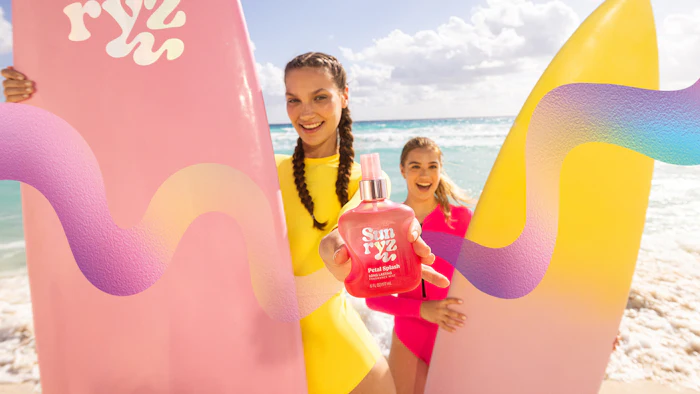
The implications are already visible in the product pipeline. PDC Brands' launch of Sunryz, a body care brand explicitly created for Gen Alpha tweens, avoids attempting to translate an adult beauty proposition downward. Instead, the brand builds the category around what younger consumers appear to want: fragrance, sensorial textures, self-expression and “glow,” paired with parent-friendly positioning around skin support and age appropriateness. Its initial assortment includes body mist, body cream, shimmer body oil and body wash, with three fragrance profiles designed to be layered.
The shopping journey is also changing. Today, a young consumer can encounter a product through a creator, research its ingredients, ask an AI assistant for alternatives, see it discussed by friends and then walk into a store to try it. That's a very different beauty funnel.
That said, the Ulta/NielsenIQ research found that 98% of parents and guardians play an active role in beauty and personal care purchasing, while parents are the single most helpful beauty influence for Gen Alpha, ahead of social media and friends.
Brands have to make products and experiences desirable to the child while simultaneously communicating safety, efficacy and appropriateness to the parent. Sunryz addresses that tension directly with dermatologist-tested formulas, at least 90% naturally derived ingredients and a focus on hydration and gentle care.
For formulators, that could mean a growing premium on age-appropriate efficacy rather than simply reduced-strength versions of adult products. For retailers, it means education and knowledgeable associates become increasingly important. And for marketers, it means speaking to younger consumers without exploiting the insecurities that can accompany beauty at an increasingly young age.
The winning beauty brands will be the ones that understand how a young consumer moves from curiosity to confidence and how parents, peers, creators, stores and algorithms all participate in that journey.