The 2026 Fragrance Agenda: Mood Boosters, 'Lickable' Gourmand and Beyond
Apr 21st, 2026
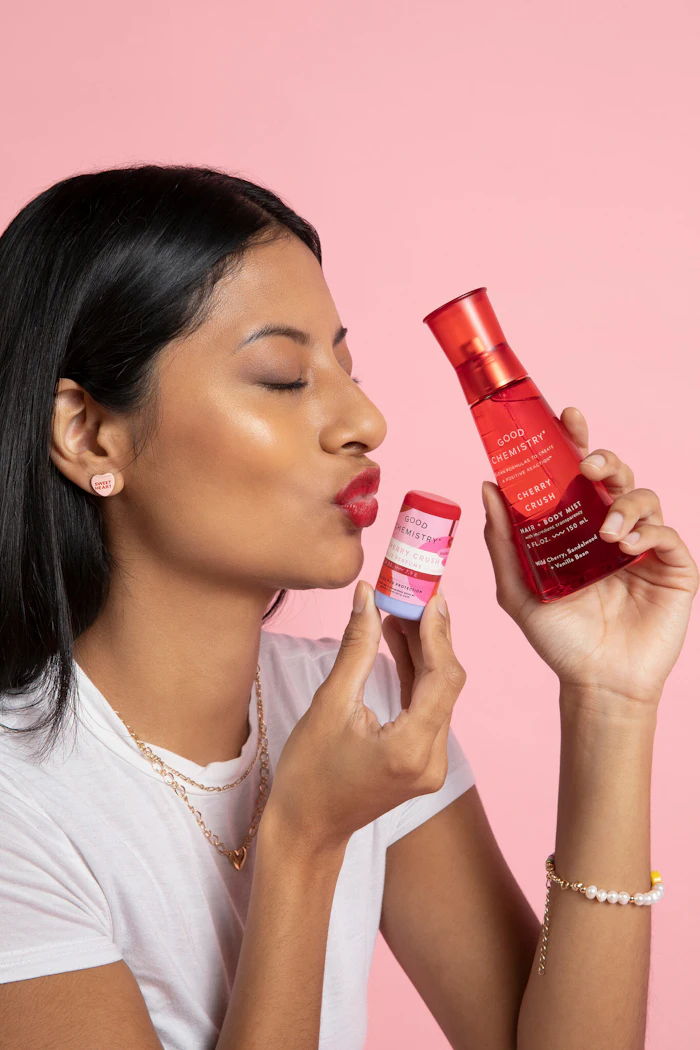
Good Chemistry has launched solid perfumes for $9.99 at Target. The alcohol-free, skin-loving formula—enriched with cocoa butter and jojoba oil—is designed specifically for pulse-point layering and on-the-go refreshes.
Good Chemistry
The 2026 fragrance landscape is increasingly defined by scent layering, edible gourmands, portable formats, self care rituals, an emerging Gen Alpha consumer still developing its own habits and tastes, and a Middle East that is increasingly influential in setting trends. To understand what that means for perfumers, fragrance developers and product developers in fragrance, beauty and personal care, we broke down recent launches and market data for actionable takeaways.
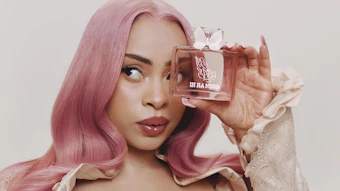
Brands like Skylar are capitalizing on the edible scent movement. Its recent launch, Pomegranate Princess, pairs juicy pomegranate and strawberry with a soft base of whipped frosting. Pictured is Skylar's chief creative officer, Leah Kateb, who gained fame on Love Island. Skylar
This article is only available to registered users.
Log In to View the Full Article
The 2026 fragrance landscape is increasingly defined by scent layering, edible gourmands, portable formats, self care rituals, an emerging Gen Alpha consumer still developing its own habits and tastes, and a Middle East that is increasingly influential in setting trends. To understand what that means for perfumers, fragrance developers and product developers in fragrance, beauty and personal care, we broke down recent launches and market data for actionable takeaways.
The Rise of the Edible Gourmand and 'Lickable' Perfume
Brands like Skylar are capitalizing on the edible scent movement. Its recent launch, Pomegranate Princess, pairs juicy pomegranate and strawberry with a soft base of whipped frosting. Pictured is Skylar's chief creative officer, Leah Kateb, who gained fame on Love Island. Skylar
The gourmand category has moved beyond simple vanilla notes into a space that Spate data defines as "edible perfume." (That said, vanilla perfume enjoys high popularitya, per Spate data, with consumer interest increasing more than 24% between January and December 2025.) Also known as "lickable" perfume, these formulas are designed to be experienced through both scent and taste. While still emerging in the popular imagination, the trend has exploded by 936.5% year-over-year, per Spate, driven almost entirely by TikTok, which holds an 83.8% popularity share.
Brands like Skylar are capitalizing on this edible scent movement. Its recent launch, Pomegranate Princess, pairs juicy pomegranate and strawberry with a soft base of whipped frosting.
This shift indicates a consumer desire for fragrances that feel indulgent and delicious, moving the category closer to a culinary experience. Despite the high engagement (4.5%), per Spate, consumer sentiment remains mixed (6.7/10), suggesting that while the lickable concept is a powerful marketing hook, the industry still has a hurdle in convincing the broader public of its everyday utility.
Among the popular notes identified by Spate in the gourmand space include, pistachio, caramel, honey, vanilla, strawberry, watermelon, oud, bergamot, banana and matcha.
Middle Eastern Influence and the 'Inspired-By' Luxury Gap
Kayali, founded by Mona Kattan, recently expanded its Eden Collection with Sweet Peach | 35 and Plush Pear | 23, utilizing vibrant lacquered glass bottles inspired by traditional Middle Eastern oud bottles. Kayali
A significant theme in 2026 is the embrace of Middle Eastern scent philosophy and heritage. Kayali, founded by Mona Kattan, recently expanded its Eden Collection with Sweet Peach | 35 and Plush Pear | 23, utilizing vibrant lacquered glass bottles inspired by traditional Middle Eastern oud bottles. The numbers on the bottles—such as 35 or 23—specifically denote the rounds of formulation required to achieve the "perfect juice," a nod to the region's focus on meticulous craftsmanship.
Simultaneously, the industry is seeing a sophisticated entry of Middle Eastern brands aimed at closing the gap between luxury quality and mass-market accessibility. Match Perfumes, founded in Saudi Arabia by Sara M. Alrajhi, recently debuted in the U.S. market with a collection of 40 "inspired-by" fragrances.
Match Perfumes, founded in Saudi Arabia by Sara M Alrajhi, recently debuted in the U.S. market with a collection of 40 "inspired-by" fragrances.Match Perfumes
Unlike previous dupe houses, Match Perfumes argues it uses a vertically integrated approach, controlling everything from in-house formulation to final bottling. By engineering oils that achieve a 90% match rate to world-famous designer scents while maintaining an elegant identity, the brand says it is challenging the traditional luxury markup. Match Perfumes' foundational philosophy—that all fragrances can be traced back to just seven original scent origins—is intended as a direct challenge to the exclusivity narratives of prestige houses.
Gen Alpha: The Next Growth Frontier
PDC Brands recently launched Sunryz, a brand specifically designed for Gen Alpha, highlighting a generationally significant theme: "trend meets trust."Sunryz
While Gen Z has been the focus of marketers in recent years, 2026 marks a moment when Gen Alpha tweens are increasingly viewed as a core growth opportunity. PDC Brands recently launched Sunryz, a fragrance-forward brand specifically designed for this demographic, highlighting a generationally significant theme: "trend meets trust."
Sunryz's products are dermatologist-tested and more than 90% naturally derived, per the brand, addressing parental concerns about what young skin absorbs.
The collection includes "Whipped Body Cream" and "Shimmer Body Oil," satisfying Gen Alpha's desire for the lush textures they see in shareable social media routines.
Scents like Amber Sol (black amber plum and vanilla woods) and Golden Sugar (pistachio and salted caramel) mirror prestige gourmand trends but are priced at an accessible $7.97, allowing for the creation of a fragrance wardrobe and layering rituals.
The Portability Revolution: Solid Perfumes and Sticks
According to Spate, the popularity of Solid Perfume has grown 132.3% year-over-year, remaining a relatively under-the-radar trend that is gaining traction. This format addresses the messiness of traditional balms while tapping into the consumer desire for portable fragrance rituals.
Brands like Glossier and Diptyque lead search interest, with Sol de Janeiro currently dominating the TikTok conversation via its jelly balm format. Launched in February 2026, the Jelly Perfume Balm range comprise pocket-sized, alcohol-free fragrances that, according to the brand, "glide on smooth, and melt into the skin for a delicious experience that feels as good as it smells."
Outside the more established brands, Good Chemistry has democratized the format, launching solid perfumes for $9.99 at Target. Its alcohol-free, skin-loving formula—enriched with cocoa butter and jojoba oil—is designed specifically for pulse-point layering and on-the-go refreshes.
The surge in search interest for the perfume stick format (850 average monthly searches) suggests that consumers may be moving away from tins in favor of twist-up applicators that offer even greater convenience and hygiene.
Cultural Indulgence and Heritage Storytelling
Maesa’s new incubator brand, Scents Unearth'd, has built a portfolio rooted in off-the-beaten-path scent stories. Each fragrance serves as an olfactive homage to specific cultures.Scents Unearth'd
Storytelling has become the a key differentiator in a crowded market. Maesa’s new incubator brand, Scents Unearth'd, exemplifies this by building a portfolio rooted in off-the-beaten-path scent stories. Each fragrance serves as an olfactive homage to specific cultures:
Vanilla Crown: Sourced from Papantla, Mexico.
Royal Milk: Inspired by Egyptian heritage, featuring almond milk and blue chamomile.
Jasmine Candy: Derived from Madurai, India, with candied bergamot and jasmine absolute.
This trend moves beyond travel-inspired scents toward authentic representation, filling an unmet consumer need for heritage-based connection through scent.
Fragrance Meets Mood-Boosting Science
This year, Elizabeth Arden’s Eternal Aura—its first flagship launch in eight years—was co-created using IFF’s Science of Wellness. Elizabeth Arden
No discussion of 2026 fragrance trends can overlook the role of wellness. This year, Elizabeth Arden’s Eternal Aura—its first flagship launch in eight years—was co-created using IFF’s Science of Wellness.
Launched in 2021, the process incorporates natural ingredients scientifically proven to enhance energy, self-esteem and happiness. Specifically, it guides the creation of fragrances that deliver emotional, cognitive, and physical benefits for consumers. It also combines scientific studies and perception data to understand how scents affect wellbeing.
The platform employs IFF’s in-house AI (developed in 2006) and other digital tools to generate innovative fragrance ideas. It also gives perfumers access to a curated palette of ingredients and advanced formulation technologies.
Eternal Aura's accompanying Eternal Aura Body Balm further emphasizes the fragrance-as-body-care theme, using shea and cocoa butter to improve skin elasticity while maintaining the scent profile. This launch signals a broader industry move toward measurable emotional outcomes, where a fragrance is becoming a mood-lifting wellness experience.
Key Strategies for Fragrance & Product Development Teams
With edible perfume popularity surging 936.5% year-over-year, there is a massive white space for truly food-safe formulas or edible-smelling gourmands featuring notes like whipped frosting, wild cherry and vanilla bean.
Consumer interest in solid perfumes and perfume sticks is growing rapidly (up 132.3% year-over-year) to address the messiness of traditional balms; developers should focus on spill-resistant, alcohol-free formulas using cocoa butter and jojoba oil for easy pulse-point layering.
Gen Alpha and their parents demand a specific balance of prestige-inspired scents and high safety standards, requiring formulas that are dermatologist-tested and primarily naturally derived.
Fragrance is moving beyond aesthetics toward measurable emotional outcomes; teams should leverage biotechnology and co-distillates that are scientifically proven to enhance energy, self-esteem and happiness.
As "inspired-by" Middle Eastern brands achieve high match rates to designer scents at accessible price points ($30–$48), prestige developers must emphasize proprietary heritage storytelling and in-house production to justify higher margins.
FOOTNOTES
aSpate's proprietary Popularity Index "measures a trend's share of voice across platforms, focusing on Google Search and TikTok. By analyzing trends and their popularity on both, the report provides a clearer picture of what's truly driving the beauty conversation." Some details contained in this report were derived from Spate's recent analysis: https://www.spate.nyc/reports/2026-fragrance-report-key-trends-brands-and-scents.
 Brands like Skylar are capitalizing on the edible scent movement. Its recent launch, Pomegranate Princess, pairs juicy pomegranate and strawberry with a soft base of whipped frosting. Pictured is Skylar's chief creative officer, Leah Kateb, who gained fame on Love Island. Skylar
 Kayali, founded by Mona Kattan, recently expanded its Eden Collection with Sweet Peach | 35 and Plush Pear | 23, utilizing vibrant lacquered glass bottles inspired by traditional Middle Eastern oud bottles. Kayali
 Match Perfumes, founded in Saudi Arabia by Sara M Alrajhi, recently debuted in the U.S. market with a collection of 40 "inspired-by" fragrances.Match Perfumes
 PDC Brands recently launched Sunryz, a brand specifically designed for Gen Alpha, highlighting a generationally significant theme: "trend meets trust."Sunryz
 Maesa’s new incubator brand, Scents Unearth'd, has built a portfolio rooted in off-the-beaten-path scent stories. Each fragrance serves as an olfactive homage to specific cultures.Scents Unearth'd
 This year, Elizabeth Arden’s Eternal Aura—its first flagship launch in eight years—was co-created using IFF’s Science of Wellness. Elizabeth Arden
 This year, Elizabeth Arden’s Eternal Aura—its first flagship launch in eight years—was co-created using IFF’s Science of Wellness. Elizabeth Arden