The Estée Lauder Companies delivered a third-quarter performance that underscores a business in transition—still absorbing restructuring and external pressures, but increasingly showing the financial and operational lift from its “Beauty Reimagined” strategy and Profit Recovery and Growth Plan (PRGP).
(The news comes amid a potential merger deal with Puig.)
For the three months ended March 31, 2026, net sales rose 5% to $3.7 billion, with organic growth of 2%. While that top-line expansion was modest, the quality of earnings improved meaningfully. Gross margin expanded 140 basis points to 76.4%, reflecting PRGP-driven efficiencies, pricing discipline and improved mix—particularly from higher-margin fragrance. Adjusted operating income surged 38%, pushing adjusted operating margin up 360 basis points to 15.0%. Reported operating income, however, declined due to restructuring charges and an $84 million litigation-related contingency, highlighting the still uneven nature of the turnaround.
CEO Stéphane de La Faverie framed fiscal 2026 as a “pivotal year,” with the company on track to restore organic growth and expand margins for the first time in four years. That confidence is reflected in a raised full-year outlook, with expectations now skewing toward the high end of prior organic sales guidance and roughly 300 basis points of adjusted operating margin expansion.
Fragrance Leads, Skin Care Stabilizes, Makeup Rebuilds
Performance across categories reveals a portfolio in rebalancing mode, with fragrance clearly emerging as the growth engine.
Fragrance posted standout results, with net sales up 13% reported and 10% organically, marking double-digit growth year-to-date. Brands such as TOM FORD, Le Labo, Jo Malone London and KILIAN PARIS drove momentum, supported by innovation, expanded distribution and new freestanding stores. The category also delivered strong profitability, benefiting from premium positioning and global demand resilience.
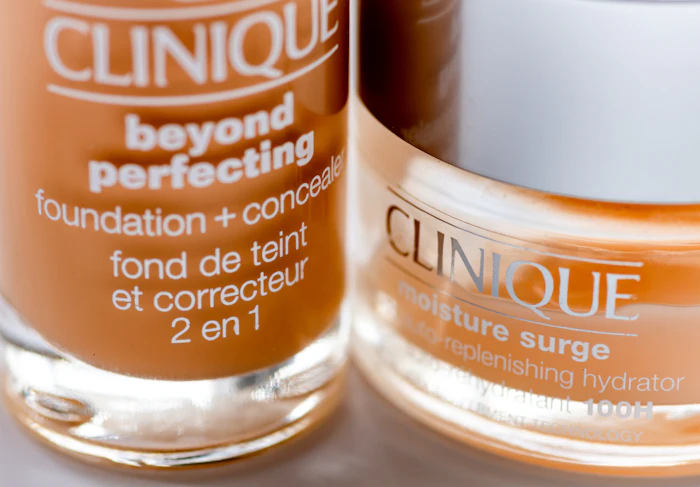
Skin care—the company’s largest division—was effectively flat organically, masking a mix of gains and declines. La Mer continued to outperform with high-single-digit growth, fueled by hero products and new launches, while The Ordinary delivered double-digit gains through expanded distribution and accessibility. These gains were offset by softness in legacy brands like Clinique and Origins, indicating ongoing repositioning challenges in parts of the portfolio.
Makeup showed early signs of stabilization, with 4% reported growth but a slight organic decline. M·A·C was a bright spot, particularly in Asia and through new retail partnerships like its U.S. rollout in Sephora. Clinique, Bobbi Brown and Estée Lauder also contributed to share gains in the U.S., suggesting that innovation and channel expansion are beginning to reconnect with consumers.
Hair care remained the smallest and most volatile segment, declining organically as the company continues to refine its positioning and brand strategy in this category.
Asia Rebound and Global Share Gains Support Geographic Recovery
Geographically, Estée Lauder’s recovery is increasingly tied to Asia—particularly Mainland China, where the company reported high-single-digit growth and share gains for the third consecutive quarter. Strength in prestige brands like La Mer, Tom Ford and The Ordinary helped the company outperform the broader prestige beauty market.
Beyond China, performance was more mixed but generally improving. The U.S. market delivered volume share gains across all categories, while Japan and Korea benefited from makeup-led momentum. Western Europe saw more targeted gains, particularly in fragrance and skin care, signaling a gradual normalization of demand.
Three of four regions posted growth, reinforcing management’s view that the company is regaining competitive footing globally.
PRGP and “One ELC” drive margin expansion and operational reset
Central to the improving financial profile is the PRGP, which continues to outperform expectations. The program is reducing non-consumer-facing costs, streamlining operations and funding reinvestment into marketing, innovation and digital capabilities.
At the same time, Estée Lauder is advancing its “One ELC” model—a structural overhaul of how the company operates. Partnerships with Shopify, Accenture and WPP are modernizing digital infrastructure, enterprise services and media buying, respectively. The rollout of a unified operating ecosystem is expected to be fully deployed by fiscal 2027, a milestone management sees as critical to unlocking scale and agility.
These efforts are already visible in margin expansion, improved cash flow and more disciplined capital allocation. Free cash flow reached $891 million year-to-date, a significant increase from the prior year, driven by stronger operations and lower capital expenditures.
Outlook: Cautious Optimism Into 2027
Looking ahead, Estée Lauder is signaling steady—but not explosive—growth. For fiscal 2027, the company expects organic net sales growth of 3% to 5% and adjusted operating margins approaching 13%.
That outlook reflects confidence in continued execution of Beauty Reimagined and PRGP benefits, but also acknowledges macroeconomic and geopolitical uncertainties, including tariff pressures and ongoing global instability.
In the near term, fiscal 2026 is shaping up as a reset year where operational discipline, portfolio shifts and channel expansion are laying the groundwork for more consistent growth. Fragrance momentum, a stabilizing skin care base and incremental gains in makeup suggest a more balanced growth algorithm is emerging.