Compelling consumer claims can make or break a product launch. Claims such as “95% saw smoother skin,” “reduces frizz,” “improves scalp health,” or “helps users feel more confident” influence purchase decisions, support retailer conversations, and help brands differentiate themselves in a crowded market. They are one of the forms of proof of efficacy consumers demand before buying.
In a May 2026 primary online consumer study, The Benchmarking Company (TBC) asked 4,000+ US female beauty, personal care, and wellness consumers about trust factors involved in the purchase decision of three types of skincare categories: doctor brands, “clean” brands, and brands of tools and devices used to enhance topical skincare products. Find out which categories earn her trust, and why.
Doc Brands Mean Higher Expectations
Interest in doctor/derm brands is strong, with 86% of respondents saying they would be interested in trying a doctor/derm brand if they aren’t already doing so.
There is an inherent trust factor in this type of brand, described to respondents as: often developed or co-developed by a medical professional such as a dermatologist or other medical doctor that focuses on clinical, science-backed formulas that treat specific concerns. Compared to other skincare brands, 60% believe doctor brands are somewhat more effective, with 26% believing they are much more effective. Younger consumers (Gen Z) have an even stronger trust factor with doctor brands, with 50% saying they are somewhat more effective than other types of skincare, and 38% saying they are much more effective. Younger consumers are also more interested in trying these types of brands than Gen X or Baby Boomer consumers.
Strong expectations follow the strong trust factor. Seventy percent (70%) of respondents expect to experience positive results from using doctor brands sooner than if they were using a non-doctor brand, and 30% expect those results to be at the same rate as non-doctor brands.
Doc Brand Usage and Rationale
Seventy-seven percent (77%) of respondents say they do use at least one doctor brand for their everyday skincare needs today. The following brands were listed by respondents as the doctor brands they regularly use:
- 56% CeraVe
- 41% La Roche Posay
- 21% Murad
- 20% SkinCeuticals
- 19% Perricone MD
- 16% EltaMD
- 14% Dr. Dennis Gross
- 5% Obagi/SkinMedica (tied)
- 4% Dr. Barbara Sturm/Augustinus Bader/ReVive/111Skin (tied)
- 3% Alastin/Therabody/PCA Skin (tied)
- 2% Dr. Idriss/Lancer Skincare/Skinbetter Science/Erno Laszlo/Revision/Element Eight/Dr. Whitney Bowe (tied)
Facial cleansers (59%), serums (41%), facial day moisturizers with SPF (41%), and facial night moisturizers (39%) represent the top doctor SKUs consumers use. For Gen Z doctor brand users, acne medications and serums came in at 9%.

Doctor brand facial serums command the highest price, with 61% of users of those products spending $61+ each time they purchase a serum. Facial essences/mists (39%), night creams (37%), facial oils (32%) and eye creams (31%) were also doctor SKU categories in which consumers spend $61+.

The Specialist Trust Factor
When asked the reasons why respondents trust doctor brands, authority rules. The fact that the brand was created by a skincare expert rated highest (57%), along with strong clinical results (57%) as reasons for use. More than half (54%) believe a doctor brand uses higher quality ingredients, and 45% say these types of brands are recommended by her own doctor or dermatologist as ones to trust. That these brands are grounded in science (41%), with usually cleaner formulations (32%) rang true as well.
But scientific results and an impressive ingredient lineup don’t fully give consumers the confidence they look for when considering the purchase of a doctor brand. Thirty-one percent (31%) also gravitate toward these brands because they have strong real-world consumer perception testing results to back up the scientific findings.
A Connection to Clean
Similar to doctor brands, 86% of respondents find clean beauty brands of interest, even if they aren’t using them yet. Nearly three-fourths of respondents (72%) say they use at least one skincare or makeup product regularly that they feel is a “clean” brand. Clean brand usage is highest among younger respondents, with 85% of Gen Z respondents saying they use at least one clean brand, and 78% of Millennial-age respondents saying they do as well.
The Ordinary (33%), Drunk Elephant (22%), Dermalogica (17%), Milk (16%), and Ilia Beauty (14%) top the list of clean brands used.

Facial cleanser (63%), facial serums (51%), eye creams/gels/treatments (38%), body skincare products (38%), and nighttime facial moisturizers (37%) are the clean skincare SKUs she uses most often.
In general, respondents spend less for clean skincare than doctor brand skincare, buying most of her products in the $21-40 range.
Clean Skincare SKUs Used:

Clean Makeup
Lipstick, stain, or gloss (59%) was cited as the top clean makeup product used, followed by foundation (57%), mascara (53%), concealer (46%), blush (45%), eyeshadow (40%), eyeliner (36%), and brow products (33%). Respondents typically spend $5-$40 for each clean makeup product they purchase; however, complexion products can command a higher share of her wallet. Forty-three percent (43%) will spend more than $40 for a clean foundation, with 25% spending $40 and higher for a concealer.
The Case for Clean
For those using clean beauty brands, the feeling that they are better for my skin’s health garnered the highest rating (73%) as a reason for usage. That they have higher quality ingredients followed (51%), with clean products being better for the environment (44%), they simply work better for my skin (38%), they make me feel better about my own environmental footprint (31%), and the feeling that they are safer than traditional skincare (31%) topped her reasons for use.
Still, reading strong real-world consumer perception test results were a key motivator for clean beauty product use for 20% of all respondents. That proof of efficacy before buying was even more motivating for Gen Z respondents (24%) and Millennial-age respondents (24%).
Proof of efficacy definitely rules. Asked if they had to choose which matters most, respondents said they’d choose proven effectiveness (64%) over clean/safe ingredients (36%).
Skincare Tools & Devices Now Mainstream
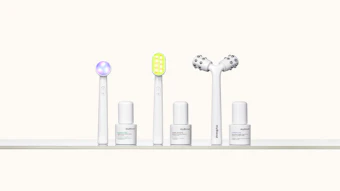
The global beauty tools market size was valued at $73.5B in 2025 and is projected to grow from $76.3B this year, to $117.2B by 20341. US women are seeing the need for tools and devices to enhance their topical skincare products’ performance, with 43% saying they use at least one tool of this type now. As a whole, 80% are interested in trying a skincare tool or device.

The most popular brands respondents use now include:
Derma/facial rollers (49%), cleansing brushes (41%), exfoliating tools (41%), Gua sha devices (35%), light therapy face masks (31%) are her top device products.
(1Fortune Business Insights. https://www.fortunebusinessinsights.com/beauty-tools-market-106541)

Respondents use these devices because they get better skincare results using the devices than their topical products alone (62%), they’re trying to achieve professional level at-home results (53%), they’re soothing to use (49%) and again – because the devices carry the proof-of-efficacy factor. Forty-nine percent (49%) use them because of their strong clinical/scientific results, and 38% use them because of their strong real-world consumer perception testing results.
Tools and devices often command higher price tags, with 46% of respondents who buy microcurrent facial toning devices spending $151 or more on the product.
Because many tools are typically higher priced than topical skincare products, Gen Z and Millennials put an even greater weight on real-world consumer perception testing than older respondents, with 48% of Gen Z and 45% of Millennials saying this metric is highly influential in their purchase decisions.
Why Research Rigor Matters More Than Ever in the Skincare Efficacy Race
Today’s consumers are highly informed and increasingly skeptical. They expect transparency, authenticity, and proof.
A qualified third-party research partner helps brands:
- Generate credible, consumer-relevant claims
- Reduce legal and regulatory risk
- Increase retailer confidence
- Strengthen marketing effectiveness
- Build long-term consumer trust