The age of AI isn’t coming—it’s already rewriting beauty. From personalized skin care to predictive product recommendations, artificial intelligence is embedded in the very language of the industry. Consumers expect it. Brands can’t ignore it. Those who master AI don’t just adapt—they innovate, differentiate, and dominate. Those who don’t risk fading into irrelevance.
This report dives into the AI-driven transformation reshaping beauty: the latest technology hitting the market, actionable strategies from industry experts, and exclusive insights on hyper-personalization, human-AI collaboration, and the next frontier in beauty discovery. From ChatGPT-driven searches to AI-powered smart mirrors and skin simulations, the beauty landscape is no longer just about products—it’s about prediction, personalization, and performance.
Welcome to the era where data meets desire, algorithms meet artistry, and AI isn’t optional—it’s essential.
The New Beauty Guru: How ChatGPT is Changing the Search Formula
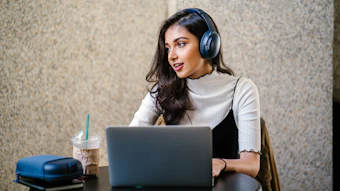
Consumers are increasingly turning to AI, specifically ChatGPT, for personalized beauty advice. While Google remains crucial for visual discovery and transactions, ChatGPT is emerging as a powerful complementary channel, per Spate's "AI Search in Beauty" report1. Acording to the report, understanding top ChatGPT queries will be key for brands to create content that meets consumer demand and enhances visibility in this AI-driven environment.
Olivier Zimmer, co-founder of Spate, said, "Consumers turn to ChatGPT for personalized, practical advice (i.e., drugstore dupes or long-wear products) along with tutorial-style guidance (i.e., minimalist makeup routines, contouring techniques) that the software application can deliver conversationally."
 Consumers are increasingly turning to AI, specifically ChatGPT, for personalized beauty advice. Asad at Adobe Stock
She added, "On the other hand, tutorial and technique-based trends stand out for having the highest ChatGPT vs. Google ratios. The top three trends with the highest ChatGPT share are contouring (41.5%), natural look (31.7%) and eye look (20.6%)."
Although ChatGPT currently accounts for a smaller volume of beauty searches (around 4.3%), its impact is profound due to the nature of these queries. Users are looking for solutions, recommendations and detailed how-to guides, reflecting a high intent to learn and potentially purchase.
Revieve Shares: Insights on How Beauty Brands are Building an AI Empire
As consumers become more AI savvy, brands should follow, exploring how technology can elevate consumer engagement, optimize journey orchestration and drive business results.
To better understand these practices, Global Cosmetic Industry spoke to Irina Mazur, chief commercial and marketing officer at AI intelligence beauty platform Revieve, on the future of beauty and how brands can maximize their AI potential.
A New Beast to Conquer: The AI-Monolith
AI is not new despite its mass explosion within the broader consumer market and its appearance throughout brick-and-mortar and online discovery platforms.
According to Firework, the market for AI in the beauty industry was valued at approximately $3.27 billion in 2023 and is projected to reach $8.1 billion by 20282. Combined with data from the NIQ, U.S. online sales continue to significantly outpace in-store purchases, accounting for 41% of all beauty and personal care sales3.
 Online shopping platforms also continue to rise, with sites like TikTok Shop becoming the 8th largest e-commerce health & beauty retailer in the U.S.Nataliia_Trushchenko at Adobe Stock
Online shopping platforms also continue to rise, with sites like TikTok Shop becoming the 8th largest e-commerce health & beauty retailer in the U.S., achieving $1 billion in beauty sales despite its relatively young age3. Meanwhile, per Carbon, ChatGPT currently handles about 1 billion web interactions per week,4 contributing to a new wave of algorithm-based discovery ripe with potential.
The boom in technology has largely changed the way consumers are interacting within the discovery and purchasing space, and brands looking to gain momentum should be taking advantage of its marked potential.
Mazur explained, "AI actually has been around for quite some time. I think what actually happened was that it just became accessible, and because it became accessible, not only to businesses but directly to consumers, it exploded in what it can do."
She added, "And with all these new trends, consumers are changing how they're discovering. Everyone just finished conquering how to deal with overall traditional search and how to show up on that page. Now we're talking about Gemini and ChatGPT, where rules seem to be a little more severe."
Mazur notes that in the age of AI, where brand exposure is king and trends come and go at lightning speeds, a growing concern for beauty brands includes their overall online relevancy and social capital. As ChatGPT becomes a more popular search engine tool with added 'smart' capabilities, optimized SEO can now make or break a brand. She said, "With a traditional search, at least you could be on the first or second page. With the solutions like ChatGPT or Gemini, if a consumer said, 'give me the top two results,' that's all you're going to get."
She added, "And while many brands and retailers invest in innovation and are able to utilize different solutions on their channels, they are not yet sure how to put it out there and connect the rest of the ecosystem."
"Let's see what the world becomes," says Mazur. "But this is where the consumer is going. Just like everyone had to master Instagram and TikTok, now we have this new beast, and we can't avoid it."
A More Personalized Journey, with a Human Touch
The AI craze has largely left people asking, among other questions, where do people fit in within the algorithm and what space will be left to connect authentically and humanly with one another?
According to the NIQ, people have a complicated relationship with AI, with the top two fears being that it will eliminate jobs and spread misinformation.
Mazu responds to these concerns, offering her vision for a beauty industry that's human in its approach and streamlined by AI.
"[AI] will allow us to focus on more difficult tasks, things that the human eye can't see or can't tell quite as elegantly. I think [AI] will enhance the journey," said Mazur.
 Mazur explained: "Before, maybe we couldn't dream about somebody being able to sit at home and try on a product, but now we can."InfiniteFlow at Adobe Stock
AI can be the building block for personalized, consumer-based education on a mass scale. Brands are already seeing the effect of algorithm-driven discovery, like that of TikTok, which offers consumers a way to explore and self-educate on products or trends that interest them, leading to more gateways into product discovery and brand conversion.
Mazur said, "Consumers today want quick answers, and they want guided answers. But they also are used to a certain level of sophistication, and they want that sophistication to be available to them anywhere they shop. Whether it's online or in-store."
"Brands have the opportunity to create that guided educational journey by asking consumers what's important to them and what their preferences are. [AI] can highlight things they didn't know or didn't know how to communicate."
"Some consumers shop by intent, and some shop by inspiration," said Mazur. She says that, across the board, consumers want platforms that inspire, with many consumers wanting to provide a few images and have engines find something similar from the same brand or across brands—all without leaving their homes. It's a heavy task for retailers to optimize their data for AI, but Mazur claims the task is up to the reward.
She said, "It's not an easy task, especially if you're the retailer. But it builds on loyalty and trust. And usually that loyalty and trust translate to much higher conversions and higher average order value."
Data is Power; Knowledge is Human
"The other myth I hear quite often is that AI decisions are random or untrustworthy," said Mazur. "I think it's important to understand that this is not some mysterious machine that just comes up with the answers."
She explained: "Your solution is only as good as the data you give it to. AI has this massive ability to process a tremendous amount of information all at once, but if the content is wrong, the summary will not reflect the reality."
She added, "Wherever we are in the process, we need to establish the guardrails in the right way for the AI to operate. I think people fear that they will not be able to set the rules. It shouldn't be random. It shouldn't be loose."
"AI just accumulates more and more knowledge, but it still has no access to find out what it doesn't know. That's where people come in: you need to translate data to knowledge to make it truly unique," said Mazur  Mazur added, "Wherever we are in the process, we need to establish the guardrails in the right way for the AI to operate. I think people fear that they will not be able to set the rules. It shouldn't be random. It shouldn't be loose." WrightStudio at Adobe Stock
"Because data is power; knowledge is power," she said. "Having your own unique data set that is not accessible to any other competitor is becoming extremely important in the age of AI. That's what we're telling all of our partners. The more data they have, the differentiated they will become. With AI becoming so accessible, the skill that sets different people apart is their ability to ask the right question."
"I always make a silly comparison," said Mazur. "Just like you might buy the most sophisticated car in the world, if you lock it up in the garage and don't tell anyone about it, it's not going to get anywhere. Anything that you invest in needs this extra love, care, and messaging around it before the numbers can truly justify themselves."
A Last Note
Mazur ended by saying that "[AI] is becoming an absolute must-have. If you are a retailer or beauty brand that is in any of these categories, and you don't have that, you'll basically cease to exist. It's a must-have. But [AI] allows you to differentiate, build conversions and bring in a valuable amount of data."
She said, "The bottom line is, whether or not there is a person attached to the journey, you still need technology that is able to make that journey more sophisticated. No matter what, we are seeing the number of consumers that actually want to engage with the technology is climbing every single minute."
For Mazur, AI isn't optional for business or consumers. Its implementation requires deep expertise, powered by people, to make its usage faster and more efficient while still maintaining a human touch.
Below are some of the latest tech in AI taking place within the beauty space, from personal products to ingredient testing and more.
AI-Powered Smart Mirror Redefining At-Home Beauty Routines, Beauty Discovery and Commerce
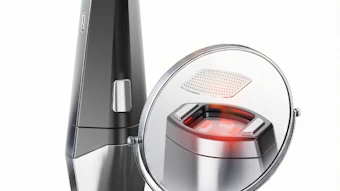
Swan Beauty has announced the launch of the Swan Beauty mirror, a next-generation, AI-powered innovation designed to transform how consumers experience, shop and discover beauty and self-care at home.
 The Swan Beauty mirror is powered by five technology pillars: an AI skin analyzer, a personalized routine builder, a smARt makeup artist, an exclusive marketplace and an embedded social community.SWAN Beauty
Blending modern aesthetics, professional-grade lighting, ultra-high-resolution imaging and intelligent beauty technology, the Swan Beauty mirror is powered by five technology pillars: an AI skin analyzer, a personalized routine builder, a smARt makeup artist, an exclusive marketplace and an embedded social community.
- AI skin analyzer: The AI skin analyzer claims to reveal the user's complexion’s story with a dermatologist-backed scan that scores and tracks 7 key skin concerns (wrinkles, pigmentation, texture, oiliness, redness, acne and UV spots) to generate a personalized skin health score and track skin's progress over time.
 Swan Beauty's AI skin analyzer claims to reveal the user's complexion’s story with a dermatologist-backed scan that scores and tracks 7 key skin concerns.SWAN Beauty
- SmARt makeup artist: Real-time recognition and dynamic overlays adapt to each user’s unique face shape to support precise makeup application. Developed alongside renowned celebrity makeup artists, the feature brings step-by-step, expert-led artistry directly into the home, giving users access to application guidance and product recommendations.
- Exclusive marketplace: The Swan Beauty mirror blends luxury retail with intelligent personalization. Its curated marketplace features an elevated edit of prestige brands, including those from retail partner Cos Bar’s portfolio: Sisley Paris, Augustinus Bader, Dr. Barbara Sturm, 111SKIN, Chantecaille, La Prairie, Charlotte Tilbury, Parfum de Marly and Initio.
- Social community: The Swan social community offers a personalized feed of tutorials, product recommendations and authentic content tailored to the user's beauty preferences, facial features and skin data. Users can share their looks, connect with creators and fellow beauty lovers and explore a personalized interactive platform.

SkinGPT: AI-Powered Skin Aging Simulation
Haut.AI has launched its SkinGPT Aging Model, a new generative AI technology capable of realistically simulating up to 40 years of skin aging under different lifestyles and environmental conditions. Noom, the digital health platform, will partner with Haut.AI to inspire healthier choices in consumers' daily lives.
How SkinGPT Works
SkinGPT is Haut.AI’s generative AI platform for hyper-realistic skin simulations, enabling virtual try-ons in skin care. Now, the platform expands its capabilities with the new aging model: a scientifically trained, identity-preserving simulation tool that enables brands to visualize how skin changes with time, lifestyle and care. The model predicts the users’ perceived age, then allows partners to add or subtract years for photo-realistic results. The model offers two modes:
- Skin Aging Mode: Focuses only on dermatological changes
- Full-Face Aging Mode: Extends to hair graying, UV exposure and weight-related effects
 Through Haut.AI's SkinGPT, users can see how lifestyle choices (including diet, exercise and skin care) can alter skin’s texture and tone, highlighting the relationship between beauty and wellness to motivate healthier, life-long choices.Haut.AI
Through these features, users can see how lifestyle choices (including diet, exercise and skin care) can alter skin’s texture and tone, highlighting the relationship between beauty and wellness to motivate healthier, life-long choices.
“Haut.AI is proud to launch this groundbreaking technology with Noom, a partner that shares our mission to help people make healthier choices and extend their health span,” said Anastasia Georgievskaya, CEO and co-founder of Haut.AI. “With our new SkinGPT Aging Model, people can see their future selves—healthy or unhealthy—side by side. This visualization turns abstract health advice into an undeniable reality, motivating action today for a longer, healthier tomorrow. Beauty and wellness are no longer reactive; they’re predictive and empowering.”
“Thanks to our partnership with Haut.AI, we’re helping people see the future in real time,” said Geoff Cook, CEO of Noom. “By visualizing how today’s habits can shape tomorrow’s health, we’re turning abstract goals into tangible motivation—empowering people to make better decisions now so they can live better longer.”
A Beauty Brand’s Guide to Using SkinGPT
- Transform Customer Education: SkinGPT gives shoppers a first-of-its-kind glimpse into their own skin’s future, visualizing how routines, sun exposure or lifestyle choices may affect them over time. This turns abstract product claims into personalized, science-backed experiences that build trust and drive adoption.
- Simulate Ingredient Efficacy: The platform can approximate the impact of commonly used anti-aging ingredients over time, providing compelling, evidence-based visualizations of “what’s possible” with consistent care. Brands can highlight the science behind their formulations without over-promising specific product outcomes.
- Reinvent Product Storytelling: By illustrating side-by-side scenarios—such as “with vs. without” the use of key actives—SkinGPT makes complex dermatological science both visual and persuasive. This storytelling power creates new opportunities for personalized marketing, product discovery and immersive retail or digital activations.
Revolutionized Lipid Extraction with AI
New Wave Biotech and the UK's Center for Process Innovation (CPI) have formed a partnership to address ongoing challenges in lipid extraction, vital for the cosmetics, personal care, health care and food sectors. Using a hybrid AI-powered simulation platform, the collaboration aims to optimize both solvent and non-solvent extraction methods and improve efficiency and sustainability in downstream processing.
Virtual Simulations for Sustainable Speed-to-Market
According to New Wave Biotech, lipids are essential in products ranging from foods to pharmaceuticals, but extraction remains costly and energy-intensive. The company's platform enables CPI to run thousands of virtual simulations to quickly analyze performance, cost and environmental factors, reducing trial-and-error and speeding up the development of sustainable products.
 New Wave Biotech's new platform enables CPI to run thousands of virtual simulations to quickly analyze performance, cost and environmental factors, reducing trial-and-error and speeding up the development of sustainable products.junet at Adobe Stock
"We’re excited to work with CPI to optimize lipid bioprocesses, which are essential for scaling many of the next-generation of sustainable products," said Nix Hall, CTO of New Wave Biotech.
"Solving this challenge is key to making alternatives affordable and accessible. By combining predictive accuracy with techno-economic and sustainability insights, our platform helps innovators cut down on trial and error and move faster toward solutions..."
High Accuracy from Minimal Data
Stephen Wright, manager of downstream processing at CPI, added, "Partnering with New Wave Biotech gives us powerful new tools to help clients scale sustainable products. Unlike many AI/ML tools that need huge datasets, this platform achieves high accuracy from minimal data, allowing us to identify the best downstream routes much earlier and with greater confidence."
Supported by an Innovate U.K. grant, the initiative builds on New Wave Biotech’s previous successes in predictive accuracy and promises to accelerate scalable, efficient bioprocessing, per the company.
True Personalization: Visual AI to Reveal Inherent and Health-related Aging and Biomarkers
LG Household & Health Care (LG H&H) recently revealed how different parts of the face age at different rates using visual AI to analyze 16,000 Korean women. According to the company, this study is the largest of its kind in Korean subjects and is a key part of LG H&H’s Skin Longevity project.
Aligning AI with Consumer-perceivable Aging
Visual AI enables machines to identify and understand visual data similarly to human vision. As the company explained, its AI research used Python programming language and employed publicly available image processing packages such as dlib and OpenCV. This enabled LG H&H’s R&I division to analyze high-resolution facial images of women ages 20 to 60 to track subtle changes in 68 facial points.
 This enabled LG H&H’s R&I division to analyze high-resolution facial images of women ages 20 to 60 to track subtle changes in 68 facial points. Boadicea at Adobe Stock
According to LG H&H, through this approach, customers can visually experience the overall progression of facial aging in a way that is easy to understand. This differentiated technology scientifically evaluates perceivable aging of the entire face by the human eye rather than the conventional method of measuring only localized skin areas.
"We focused not only on aging characteristics such as wrinkles, tone and pigmentation, but on morphological changes that progress differently across various areas of the face," said LG H&H.
"At the core of this focus is actual consumer demand. Consumers seek more than just products—they actively want personalized skin care that reflects their age, lifestyle, environment and even genetic traits.
"Additionally, the lack of data-driven, scientifically validated personalized solutions in the market was a key motivation for our research. Based on this background, we are developing technologies to precisely analyze and predict individual skin characteristics."
Future Implications for AI-driven Solutions
This research establishes a new foundation for personalized skin care, promising customization informed by both age and genetics.
"Innovating the customer experience that customers truly feel will become the core of R&D and marketing strategies in the beauty industry," LG H&H wrote. "To respond to the diverse and evolving needs of customers, providing new customer experiences through skin diagnosis and personalized care will become increasingly important.
"Furthermore, we expect rapid expansion in the market for solutions combining core AI-based diagnostic technologies with personalized skin care products. In this evolving landscape, brands that possess strong AI capabilities are expected to secure a competitive edge by offering differentiated customer experiences in the beauty market."
FOOTNOTES
1www.spate.nyc/reports/2025-ai-search-in-beauty
4explorecarbon.com/blog/plan-your-future-the-impact-of-ai-search-optimization-on-business/