The second day of the Society of Cosmetic Chemists' 79th Annual Meeting (SCC79), held Dec. 16 and 17, 2025, in NYC, opened with an awards breakfast celebrating achievements in cosmetic science, in addition to a keynote lecture by Jane Yoo, M.D., on AI-driven dermatologic solutions.
Sessions on claims substantiation, photoprotection, skin wellness and biotechnology followed, offering attendees a comprehensive look at the future of the industry. Throughout the day, the Technology Showcase also provided exhibitors a stage to present their latest work.
Awards Breakfast and Henry Maso Keynote Address
The SCC Annual Awards Breakfast celebrated outstanding contributions to cosmetic science. In addition, it featured the Henry Maso keynote lecture by Jane Yoo, M.D., from Clinical Research Center of New York, entitled, "Pixels to Formulations: How AI is shifting dermatologic skin care solutions."
How AI is Shifting Dermatology
 Keynote Jane Yoo, M.D., highlighted emerging technologies
According to Yoo, the market for AI in beauty and cosmetics is projected to surge at a CAGR of 20.1% from 2024-2031. Reflecting this forward momentum, in her presentation, she explained how early dermatological applications for AI focused on basic image recognition to identify skin conditions, then evolved to support clinicians with sophisticated diagnostic tools for skin disorder identification.
AI has also advanced enough to aid in the personalization of treatment plans for skin conditions, and to enhance diagnosis accuracy using algorithms to quickly and reliably analyze skin images. What's more, AI can be used for continued monitoring of conditions, e.g., acne. More specifically, pixel-level analysis, per Yoo, can be used to enhance images so that AI is able to detect subtle skin features and abnormalities.
Deep learning models also aid in skin type classification — in this regard, Yoo underscored the need to update population descriptors in dermatology with a more inclusive system. She emphasized how skin tone is based on melanin content, which is dependent upon genes, hormones and UV radiation.
Looking forward, Yoo highlighted emerging technologies including multispectral imaging to capture detailed, multi-dimensional skin data and improve health analysis accuracy. Also, wearable sensors can monitor skin conditions continuously for personalized insights.
For example, Yoo highlighted:
- AmorePacific, which collaborated with MIT to develop SkinSight for 24-hr monitoring of aging signs for proactive care;
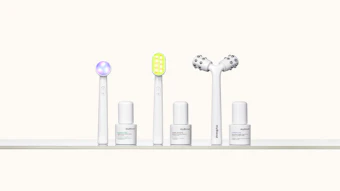
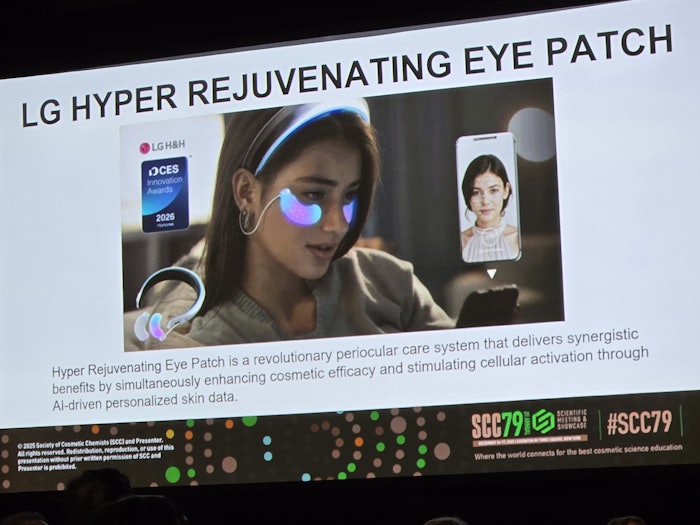
- LG H&H, for its hyper rejuvenating eye patch to enhance cosmetic efficacy and stimulate cellular activation using AI-driven personalized skin data. This tech will be awarded a 2026 CES Innovation Award; and
- CosMax's MaXpace, an automated device that reportedly enables brands to instantly deliver personalized cosmetics at the point of experience.
Lastly she noted the future potential of AI for enhanced teledermatology, global healthcare access and improving health equity.
Awards for Outstanding Contributions to Cosmetic Science
 From L: Carissa Dowdy, of Mary Kay (award sponsor); Madam CJ Walker Scholarship winner Chinaza Munonye (of the University of South Florida), and A'Lelia Bundles (Madame CJ Walker's biographer and great-great granddaughter)
Several industry stars were celebrated during the annual awards breakfast:
The Henry Maso Keynote Lecture Award, presented to Jane Yoo, M.D., for her keynote lecture;
- Student poster awards, including:
- First place: Aisha Dar, of Stony Brook University, for her work, “The Effects of Hydrophobic Additives on Gelation Temperature and Rheological Properties of Poloxamer 407 – Lithium Magnesium Sodium Silicate Hybrid Hydrogels”
- Second place: Jahilit Flores, of the University of Miami, for “Engineering Friction-activated Sustainable Microcapsules for Controlled Release”
- Third place: Molly Boros, of the University of Toledo, for the poster, “Impact of Ultramarine Blue and Zinc Oxide on the Visual Appearance of Water-in-silicone Cream Foundations
Fourth place: Manasi Desai, of the Centenary College of Louisiana, for her research on the “Modification of Nail Polish Formulations for Conductivity to Operate Capacitive Touchscreens”
 From L: Carissa Dowdy, of Mary Kay (award sponsor); Madam CJ Walker Scholarship winner Lanesa Mahon (of the University of Cincinnat), and A'Lelia Bundles (Madame CJ Walker's biographer and great-great granddaughter)
Madam CJ Walker Scholarships, including winners Chinaza Munonye, of the University of South Florida, and Lanesa Mahon, of the University of Cincinnati, and finalists Lauren Forney, of Spelman College, and Ajoa Jamila (AJ) Addae, of the University of California, Los Angeles;
The Alan B. and Jeanette Black Award, sponsored by Presperse, presented to Tony Abboud of Core Biogenesis, for the SCC78 presentation "Advancing Sustainable Bioactive Production: Leveraging Plant-Based Systems as Biofactories for the Personal Care Industry;"
The Shaw Mudge Award, sponsored by the SCC, awarded to Jaide Jensen of Arcaea for the SCC78 presentation, "Precision Prebiotics - Skin Microbiome Modulation for Cosmetic Benefits;"
The Des Goddard Award, sponsored by the SCC, given to Deby Fapyane, Ph.D., of Cellugy for the SCC78 presentation, "Redispersable Biofabricated Cellulose Powder in Sun Care: High Performing SPF Booster at Low Dosage;"
The SCC Award, sponsored by Hallstar, presented to Samuel Gourion-Arsiquaud, Ph.D., of TRI Princeton, for the SCC78 presentation entitled, "Increased Temperature Related to Climate Change Impacts the Penetration of Sunscreen into Our Skin;"
The Joseph P. Ciaudelli Award, sponsored by Croda, awarded to authors Chikara Yamauchi, Yasunori Okuma, Takayuki Togashi and Jiro Tanaka, all of Arimino, for the article entitled, "The Effects of Permanent Waving Treatment on Bleached Hair and the Factors of Damage, published in the JCS in 2024; and
The Hans Schaeffer Award, presented to Jacob Sessions, of Überlube, for the SCC78 presentation, "Personal Lubricants are Medical Devices? An Intimate Look at the Regulatory and Safety Challenges."

Claims Substantiation for Skin and Scalp, Pigment Changes, Ingredient Multifunctionality and More
The claims substantiation session focused on validating cosmetic claims. Marcella Gabarra Almeida Leite, Ph.D., from TRI Princeton, demonstrated the use of vibrational spectroscopy to evaluate skin and scalp physiology, while Silvia Benito, Ph.D., from Provital, presented a new model for studying pigment changes in atopic dermatitis and Pityriasis alba.
Paul Lawrence, Ph.D., from Biocogent LLC highlighted the multifunctionality of traditional active ingredients through epigenetic analyses, and Daphne Benderly, Ph.D., from Presperse Corp. used texture analysis to compare acrylate thickeners.
Finally, Bart Heldreth, Ph.D., from the Cosmetic Ingredient Review, provided updates on regulatory changes as the industry transitions from the Voluntary Cosmetic Registration Program (VCRP) to MoCRA's required Responsible Labeling Declaration (RLD).
Advancing Photoprotection: Impact of Processing and Spreading, Film Absorption Effects, etc.
 Eduardo Ruvolo, Ph.D., of Beiersdorf Inc., presented "From Erythema to Optics: The New Era of SPF Testing"
In the concurrent session on advancing photoprotection, Yung Chan, from Applechem, shared insights for unlocking SPF performance through processing and spreadability, while Allen Donaldson, from Macro Oceans Inc., introduced seaweed cellulose technology for clean-label formulations.
In addition, Frederic Nunzi, Ph.D., from SGS IDEA Lab discussed advances in in vitro solar testing with a closer look at the absorption of films; and James Price from Zinco Verde, Inc. presented a web application and protocol for SPF analysis.
Finally, Eduardo Ruvolo, Ph.D., from Beiersdorf Inc., concluded with a discussion on the new era of SPF testing. He highlighted several papers in the literature focused on this subject, including the two methods recently endorsed by ISO, which Ruvolo co-authored.
Luncheon Keynote: Emerging Trends in Tattooed Skin Care
 The Day Two luncheon keynote and panel discussion explored, "Current Practices and Emerging Trends in Pre- and Post-Skincare for Tattooing," which garnered much interest from the audience and sparked new product ideas.
Following the morning sessions, the luncheon featured a keynote and panel discussion exploring "Current Practices and Emerging Trends in Pre- and Post-Skincare for Tattooing," presented by Mikayla Hyland and Angela Torresi, both of the Alliance of Professional Tattooists. During their talk, the speakers emphasized pre-, during- and post-care considerations in tattooing, as well as artist-identified needs and preferences; client behaviors impacting healing; environmental and clinical variability; and emerging challenges and opportunities for product developers.
For example, pre-care products aim to optimize skin health prior to trauma, and during-care products must be safe for broken skin while also maintaining glide, preserving visibility and avoiding both build-up on the needle and skin inflammation. In addition, bandaging and protective films are commonly used for healing, where considerations must be given for duration of wear, re-application requirements, risk of trapping pathogens and consumer behavior.
Climate impact on skin is another variable: cold, dry climates increase skin irritation while hot, humid climates increase infection risk. And specialized types of tattooing, such as permanent makeup, covering scars and stretchmarks, etc., require understanding the "living canvas" to which the tattoo is given.
Finally, Hyland and Torresi presented emerging trends in tattoo skin care, ranging from preferences for multifunctional products, demand for vegan formulas yet simultaneous resurgence of animal products (à la beef tallow), decreased tolerance for heavy fragrance and others.
Attendees were engaged with the presentation and following Q&A session, which revealed how the tattooing industry is focused on understanding the science of skin.
As the session wrapped up, the presenters gave formulators one suggestion for product development: a mineral sunscreen that is more transparent. Tattoo clients are moving away from organic (chemical) sunscreens, as they can be irritating to damaged skin. However, inorganic (mineral) sunscreens can still appear white on tattoos.
Epigenetics, HA, Peptides and More for Holistic Skin Health and Wellness
After the lunch, the skin wellness session delved into holistic approaches to skin health. Fred Zülli, Ph.D., from Mibelle AG Biochemistry presented insights into reversing skin aging through epigenetic modulation, while Diana Tang, Ph.D., from Bio Genetic Technology, LLC, introduced an mRNA-based bio-genetic skin care technology.
Kaustuv Basu, Ph.D., from Pneumatophore Vea, discussed the regulation of hyaluronic acid synthesis in skin, and Blanca Martínez-Teipel, Ph.D., from LipoTrue S.L. described an in silico-designed peptide to promote autophagy and protect against senescence.
Finally, a fireside chat with Brent Ridge, Ph.D., from Beekman 1802 explored microbiome science and brand innovation.
Advances in Biotech Beauty: Sophorolipids, ECVs, Secretome Science and Others
 Melissa Bergman, of Solabia, presented a novel bio-inspired glycolipid from plant holobiont for targeting atopic-prone skin disorders.
The last session of the event highlighted the future of biotech in cosmetics. Linh Dieu Do, Ph.D., from Sasol Germany, explored sophorolipids for 2-in-1 shampoos; Mathias Gempeler, Ph.D., from DSM-Firmenich, compared plant-derived extracellular vesicles (ECVs) with traditional plant extracts for skin care; and Melissa Bergman from Solabia introduced a plant holobiont bio-inspired glycolipid for atopic-prone skin disorders.
Joan Attia, Ph.D., from Lucas Meyer Cosmetics by Clariant shared the AI-led engineering of a tetrapeptide neurocosmetic, whose efficacy the company tested in a triculture model incorporating sensory neurons, melanocytes and keratinocytes. Initially, AI identified neprilysin (NEP) as a target enzyme to address skin pigmentation, regeneration and muscle relaxation. AI also identified a material (referred to as MTP) to act on NEP.
The MTP ingredient was thus manufactured, in a sustainable and PFAS-free manner, then tested in the model, which verified not only the efficacy of the active, but also the model. Follow-up clinical studies in Europe and China confirmed the skin regeneration, lightening and botox-like effects of the ingredient.
Prithwiraj Maitra, Ph.D., from Skinmedica/Allergan Aesthetics, an Abbvie Company, concluded with a discussion on harnessing secretome science for skin health and longevity. According to Maitra, the secretome refers to all soluble and insoluble materials secreted by a cell; for example, enzymes, proteins, peptides, exosomes, cytokines, growth factors, etc. This mixture can be used to target multiple hallmarks of aging, to improve longevity.
 Prithwiraj Maitra, Ph.D., from Skinmedica concluded with a discussion on harnessing secretome science for skin health and longevity.
The SCC79 Annual Meeting ended on a high note, leaving attendees inspired and equipped with the latest advancements in cosmetic science for next-generation product development.
Mark Your Calendars for 2026
The next Annual Scientific Meeting and Technology Showcase will be held Nov. 30-Dec., 2026, at the JW Marriott LA Live in Los Angeles.