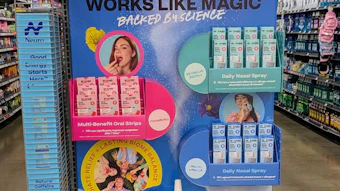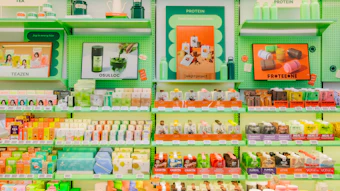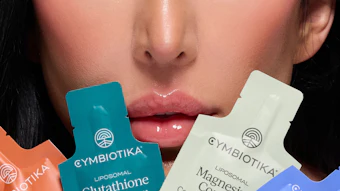
Metabolic beauty signals a fundamental shift in how skin health is conceptualized, formulated and maintained. Rather than treating the skin as an isolated organ requiring surface intervention, this framework positions skin and hair as visible readouts of internal metabolic balance, reflecting cumulative influences such as cellular energy availability, inflammatory load, oxidative stress and gut functiona. In this context, beauty becomes increasingly aligned with preventative health, operating upstream of visible damage rather than responding after dysfunction has manifested.
This article is only available to registered users.
Log In to View the Full Article
Metabolic beauty signals a fundamental shift in how skin health is conceptualized, formulated and maintained. Rather than treating the skin as an isolated organ requiring surface intervention, this framework positions skin and hair as visible readouts of internal metabolic balance, reflecting cumulative influences such as cellular energy availability, inflammatory load, oxidative stress and gut functiona. In this context, beauty becomes increasingly aligned with preventative health, operating upstream of visible damage rather than responding after dysfunction has manifested.
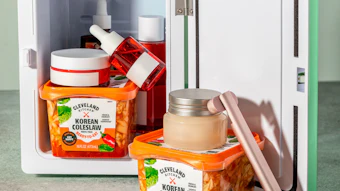
This paradigm shift is driving the rapid growth of ingestible skin care. Often referred to as “beauty from within” or “edible beauty,” ingestibles use food‑grade materials to support physiological processes associated with skin resilience, elasticity and agingc. Rather than competing with topical products, ingestibles form part of a broader ecosystem in which internal and external interventions are designed to operate synergistically.
The success of such systems, however, does not hinge on ingredient selection alone. Ingestible skin care introduces additional layers of complexity, including flavor stability, sensory acceptance, processing constraints and regulatory interpretation. Within this space, taste emerges as a decisive factor, shaping compliance, emotional engagement and ultimately, long‑term efficacy.
Taste as a structural component of compliance
From a biological perspective, taste functions as a protective filter. It evaluates potential ingestion for safety and nutritional value before conscious cognition occurs, making it the primary determinant of acceptance or rejectiond. This evolutionary role explains why taste exerts such strong influence over compliance across pharmaceutical, nutritional and wellness applications.
Many active compounds relevant to metabolic beauty possess inherently challenging sensory profiles. Bitter polyphenols, metallic mineral salts, fermented metabolites and certain amino acid derivatives can trigger aversive responses if not carefully managed. In pharmaceutical science, poor palatability is a recognized driver of non‑adherence, particularly in long‑term regimens and paediatric populationse. The same principle applies to ingestible skin care: without sustained intake, even biologically relevant formulations cannot deliver preventative benefit.
Taste therefore operates not as a secondary marketing attribute, but as a structural formulation parameter. Its management determines whether ingestibles are integrated into daily routines or relegated to short‑term experimentation. Within metabolic beauty, where outcomes depend on cumulative exposure rather than acute dosing, compliance becomes the critical success variable.
Compliance is not purely rational but emotionally mediated.
Emotional well-being and the modulation of taste perception
Taste perception is dynamic rather than fixed, fluctuating in response to emotional state. Research demonstrates that positive and negative emotions modulate basic taste perception in opposing directions, with pronounced effects on sweetness and sournessf.
Positive emotional states enhance perceived sweetness and reduce sensitivity to sourness, increasing hedonic liking and acceptance.VI Conversely, stress, frustration and negative affect amplify sour and bitter perception while diminishing sweetness, reducing overall palatability. These shifts occur through neurochemical pathways linking taste to emotional processing centers, including serotonin and noradrenaline‑mediated signallingd,f.I
For ingestible formulations, this interaction has practical implications. Products are consumed under diverse real‑world conditions, including fatigue, stress and routine disruption. Formulations designed to perform only under neutral or positive affect may fail when emotional context changes. Sensory systems must therefore be robust enough to maintain acceptance across fluctuating emotional states.
This has led to greater emphasis on layered flavor construction, aroma‑driven modulation and mouthfeel management, rather than reliance on sweetness alone. By distributing sensory load across multiple cues, formulators can reduce the risk of aversion under negative affect while supporting emotional comfort when routine compliance is most vulnerable.
Managing compliance through flavor variation and sensory rotation
Long‑term ingestion introduces an additional challenge: sensory fatigue. Even well‑liked flavors can become aversive when repeated without variation, a phenomenon well documented in clinical nutrition and oncology care, where patients experiencing dysgeusia often abandon nutritionally critical supplements due to monotony or cumulative aversiong.
To mitigate this, medical nutrition routinely employs flavor rotation strategies, offering multiple sensory profiles within the same nutritional framework. This approach reduces psychological resistance, restores autonomy and accommodates day‑to‑day fluctuations in preference and emotional state.
Ingestible beauty is increasingly adopting similar principles. Rather than positioning a single “hero flavor,” formulations are designed around adaptable flavor families that can be rotated seasonally or situationally. Cream‑forward profiles may dominate during periods of stress or low appetite, while brighter fruit‑led profiles may be preferred during warmer conditions or heightened sensory engagement.
Compliance determines efficacy. By acknowledging sensory fatigue as a systemic risk, formulators can extend product lifespan, improve routine adherence and support the preventative intent of metabolic beauty systems.
Flavor chemistry, processing and stability considerations
Effective flavor design must operate within the constraints imposed by chemistry and processing. Taste perception itself is mediated through distinct biological pathways: sweet, umami and bitter tastes signal via G‑protein coupled receptors, while sour and salty tastes act through ion channelse. Formulation strategies can therefore act either by competing for receptor activation or by preventing undesirable compounds from reaching taste receptors in the oral cavity.
Physical isolation techniques, such as cyclodextrin inclusion complexes, ion‑exchange resins, polymer coatings and solid dispersions, are widely used to mask bitterness and metallic notese. Microencapsulation and liposomal systems further allow controlled release of both actives and flavor compounds, protecting them from premature degradation while improving mouthfeel consistency.
Processing conditions play an equally critical role. Heat, shear, oxygen exposure and pH shifts can rapidly degrade sensitive flavor molecules and bioactives. Polyphenolic compounds such as EGCG are particularly prone to oxidation and are unstable under neutral or alkaline conditions, forming dimers with reduced activityh.[VIII] Moisture content and water activity further influence microbial stability and biopolymer integrity, requiring careful balance across shelf lifec,i.
Emerging delivery technologies, including nano-emulsions, nano-structured lipid carriers and edible biopolymer films, aim to address these challenges holistically by integrating stability, bioavailability and sensory acceptance within a single systemc,j.
Food‑inspired sensoriality as a compliance framework
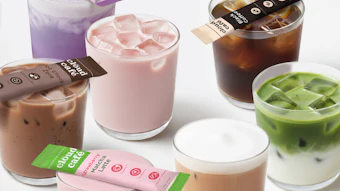
Food‑inspired sensoriality has emerged as a dominant design language within ingestible beauty, reflecting consumer preference for nourishment cues over medicinal signals. Rather than overt sweetness or pharmaceutical neutrality, current flavor trends emphasize soft indulgence and familiarityk.
Flavor families such as butter‑vanilla, banana, guava and coffee‑inspired profiles are increasingly prevalent due to their functional and emotional properties. Creamy and lactonic notes soften bitterness and acidity, enhancing mouthfeel and perceived comfort. Banana‑inspired profiles introduce natural sweetness and roundness, effectively masking metallic or fermented notes while evoking familiarity. Tropical fruits such as guava offer brightness and freshness without aggressive acidity, while coffee‑derived notes provide warmth, depth and alignment with established daily rituals.
These flavor directions function as sensory anchors, reducing cognitive friction and reinforcing routine formation. Their effectiveness lies not in novelty but in their capacity to integrate ingestibles into existing cultural and emotional frameworks associated with food and care.
Texture and aroma further reinforce these effects. Viscous, emulsified or gently creamy mouthfeel signals quality and nourishment, while aroma compounds modulate flavor perception through retronasal pathways, allowing bitterness reduction with minimal sweetener loadk.
Biomarker‑guided routines and sensory personalization
Metabolic beauty increasingly intersects with diagnostics and personalization. Skin and hair are forecast to function as accessible biomarkers reflecting internal physiological states, such as inflammation, oxidative stress and metabolic efficiencya. As consumer familiarity with wearables and at‑home testing grows, ingestible routines are increasingly positioned as adjustable inputs within personalized wellness systems.
This trend has important sensory implications. Individual differences in taste perception, including genetic sensitivity to bitterness, influence acceptance and emotional responsed. As a result, flavor personalization may become a necessary parallel to active personalization, ensuring that biologically tailored formulations remain sensorially acceptable.
Future systems may therefore include modular flavor bases or adaptable sensory layers that allow consumers to adjust taste profiles without altering core functionality. This approach aligns with compliance management principles while maintaining formulation integrity.
Regulatory boundaries and formulation accountability
Ingestible beauty occupies a complex regulatory landscape defined by food and supplement legislation rather than cosmetic frameworksc. While consumer narratives increasingly frame beauty as health, regulatory definitions maintain clear distinctions between cosmetic claims and physiological or therapeutic effectsl.
Within this context, formulation and communication must focus on support, contribution and maintenance of normal function, avoiding claims related to disease treatment or metabolic intervention. Descriptive discussion of mechanisms may be used to provide scientific rationale, but claims must remain compliant with food and supplement standardsc,l.
Food‑inspired sensoriality offers a compliant avenue for differentiation. While claims are constrained, sensory experience can legitimately communicate comfort, enjoyment and ritual, allowing value to be expressed through experience rather than therapeutic assertion.
As metabolic beauty continues to evolve, regulatory scrutiny is expected to intensify, particularly where diagnostics, biomarkers and personalized recommendations convergea. This places increased responsibility on formulators to align innovation with clarity, ensuring that sensory design, ingredient selection and communication strategies remain defensible.
Conclusion
Metabolic beauty reframes skin care as a preventative system rooted in internal balance rather than surface correction. Within this ecosystem, ingestible formulations play a critical role, but their success depends as much on sensory and behavioral design as on biological relevance.
Taste emerges as the interface between formulation science and human behavior, governing compliance, emotional engagement and perceived efficacy. When flavor is engineered with the same rigor as active selection, ingestibles transition from short‑term supplements to sustainable routines.
As the industry advances toward biomarker‑guided, personalized ecosystems, flavor and sensorial design will become increasingly strategic disciplines. The future of ingestible beauty lies not in mimicking pharmaceutical models, but in integrating metabolic science with food‑grade pleasure to support long‑term, preventative skin care systems.
FOOTNOTES
- aMintel (2025). 2026 Global Beauty & Personal Care Predictions. London: Mintel Group Ltd.
- bBlack Swan Data (2025). 5 Food and Drink Mega Trends for 2026. London: Black Swan Data.
- cDini, I. (2024). “Edible Beauty”: The Evolution of Environmentally Friendly Cosmetics and Packaging. Antioxidants, 13, p.742.
- dMastinu, M., Melis, M., Yousaf, N.Y., Barbarossa, I.T. and Tepper, B.J. (2023). Emotional responses to taste and smell stimuli: Self-reports, physiological measures, and a potential role for individual and genetic factors. Journal of Food Science, 88, pp.A65-A90.
- eHu, S., Liu, X., Zhang, S. and Quan, D. (2023). An Overview of Taste-Masking Technologies: Approaches, Application, and Assessment Methods. AAPS PharmSciTech, 24:67.
- fNoel, C. and Dando, R. (2015). The effect of emotional state on taste perception. Appetite, 95, pp.89-95.
- gRavasco, P. (2005). Aspects of taste and compliance in patients with cancer. European Journal of Oncology Nursing, 9, pp.S84–S91.
- hMangla, B., et al. (2025). Advances in research and applications of Epigallocatechin gallate: from green tea to therapeutic gold. Journal of Food Science and Technology, 62(12), pp.2213–2232.
- iBalzan, S., et al. (2024). Behind the scenes of taste: an exploratory study of non-compliance in artisanal bakery and pastry laboratories. Italian Journal of Food Safety, 13:12235.
- jOlawade, D.B., Wada, O.Z. and Ige, A.O. (2024). Advances and recent trends in plant-based materials and edible films: a mini-review. Frontiers in Chemistry, 12, p.1441650.
- kStylus ([N.D.]). Sensorial Beauty: Future Insights. Stylus.
- lMenni, A.E., et al. (2026). Neurocosmetics or Hype? Psychobiotic Potential of Strain-Specific Cosmeceuticals. Nutrients, 18(5).