Unilever reported first-quarter 2026 underlying sales growth of 3.8%, but the period was also marked by a major strategic pivot following its March agreement to combine its foods business with McCormick & Company. The deal is reshaping Unilever’s portfolio architecture, effectively repositioning the group toward a pure-play beauty, well-being, personal care and home care company.
The beauty and well-being sector grew 3.6% in the first quarter, totaling €3.1 billion, while personal care grew 3.7%, totaling €3.3 billion.
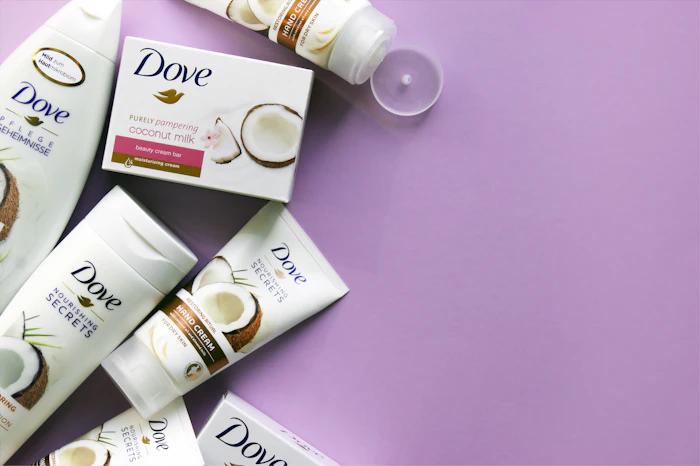
The 3.6% gain in beauty and well-being is evenly split between volume and price, which signals healthy underlying demand rather than price-led inflation masking weakness. Core megabrands—Dove and Vaseline—are doing the heavy lifting, while prestige is adding momentum at the top end. Sunsilk’s return to volume growth suggests prior softness is stabilizing. The weak spot is well-being, which dipped slightly due to a tough comparison, not necessarily a structural issue. Results could be boosted by its Grüns ingestible nutrition acquisition.
Personal care was a bit more price-led. At 3.7% growth, the majority came from pricing (2.5%), with more modest volume expansion (1.1%). Performance is being driven by deodorants and skin cleansing—again anchored by Dove—indicating Unilever’s strength in everyday, repeat-use categories. Premium innovation is clearly supporting pricing power. In addition, the rebound in Latin American deodorants (especially Brazil) shows that execution fixes—like format mix—are translating into tangible recovery.
The foods-McCormick transaction, announced in March and reiterated alongside the results, values Unilever Foods at an enterprise value of $44.8 billion, implying a 13.8x EV/EBITDA multiple. Structured as a tax-efficient reverse Morris trust, the transaction will see Unilever and its shareholders receive a 65% fully diluted equity stake in the combined business, valued at $29.1 billion, alongside $15.7 billion in cash at closing. Those proceeds are earmarked for balance sheet strengthening, separation costs, and a €6 billion share buyback program planned through 2029.
Under the agreed structure, Unilever shareholders will ultimately own 55.1% of the new combined entity, while Unilever itself retains a 9.9% direct stake, and McCormick shareholders hold the remaining 35%. The combined business—expected to generate roughly $20 billion in revenue—will be a global leader in spices, seasonings, and condiments, with projected annual run-rate cost synergies of about $600 million within three years of completion.
Governance and leadership of the new entity will be led by McCormick’s current management team, with Brendan Foley serving as chairman, president and CEO, and Marcos Gabriel as CFO. The board will include 12 directors, with four appointed by Unilever, and the company will maintain its NYSE listing while also establishing a secondary European listing and an international headquarters in the Netherlands. Completion of the transaction is expected by mid-2027, subject to regulatory approvals and McCormick shareholder consent.
Against this backdrop, Unilever’s quarterly performance reflected steady operational momentum across its remaining businesses. Volume-led growth of 2.9% underpinned the 3.8% underlying sales increase, with particularly strong performance in home care, which rose 6.1%, and continued strength in emerging markets such as India and Latin America. Turnover declined 3.3% to €12.6 billion due to currency headwinds, despite positive underlying trends and portfolio adjustments.
Management reiterated that the foods separation is a central step in reshaping the company into a higher-growth, more focused business with leading positions in its core health and personal care categories. Post-transaction, Unilever is expected to operate as a €39 billion pure-play health and personal care group, with approximately 90% of revenues derived from brands ranked #1 or #2 in their categories.
Capital allocation remains a key focus, with €1.5 billion in share buybacks initiated in April and a broader €6 billion return program tied to the Foods transaction proceeds. The company also confirmed continued progress on productivity initiatives, with €750 million in savings already delivered under its €800 million target by the end of 2026.
Unilever reaffirmed its full-year 2026 outlook, expecting underlying sales growth at the lower end of its 4%–6% range, at least 2% volume growth, and a modest improvement in operating margin versus 2025, despite continued macroeconomic uncertainty and the ongoing portfolio transformation.